Showing posts with label Reviews. Show all posts

Saturday, 30 May 2015

Such Stuff As Dreams Were Made On? (Treading The Boards)

Such Stuff As Dreams Were Made On? – Associate Director Nick Bagnall’s vision of the Athenian Court versus woodland magic proves to be a sinister and enchanting realisation in one of the latest offerings from the Liverpool Everyman.


From the start of Bagnall’s contemporary, innovative interpretation of “A Midsummer Night’s Dream”, it is clear the audience will see a world of mischief and wonder appear before their eyes in a production which places firm emphasis on the darker aspects of the text. 

Cynthia Erivo’s trapeze artist Puck appears from above clad as Master of Ceremonies to introduce us to proceedings and cast her sparkling wand-slim cane to display a predominantly bare stage backed by a graffiti scrawled blackboard.  Soon enough, the stage widens to transform from Athenian public school and grey uniforms to paperwork forest – its floor littered with discarded leaves constructed from the abandoned homework or note passing musings of the student lovers, played by Emma Curtis and Charlotte Hope (making their stage debuts) and recent graduates Tom Varey and Matt Whitchurch.

Cleverly, the woodland floor is backed by a circus-like hall of mirrors, creating the illusion of an extended dream forest cast back into the audience’ eye and literal reflection in a play rife with imagery concerning appearance and reality.  The trickery continues as, later, the woodland fairies appear unannounced from beneath the papers – once again playing with our perceptions.

Transformation, too, is key to the inspired use of the paper littered stage, as the scrunched leaves become bedding and blankets surrounding the characters as they slumber – the rustling, crunching noise as they shift whilst being reassembled adding an auditory aspect to the suggestion of the natural world we, as audience, inhabit.

The presentation of Hermia and Lysander and Helena and Demetrius as gym slip lovers is an interesting one, given it provides an alternative, more modern, explanation for the irrational infatuation induced by the love potions and sense of emotion (at the hands of the darkly mischievous Puck) wielding control over the teenagers, who are literally and figuratively helpless whilst its spell remains cast over them.  Careless crushes rule – proving fleeting and easily discarded once the initial intense flood of hormones fades.  Meanwhile, “Midsummer Madness” abounds – complete with hissy hits and rivalry between the partner switching couples.  Happily, the energy needed to convey the jealous conflict amidst the mischievous misunderstandings proves easy to conjure for the young actors. 

Contrary to some interpretations of Robin Goodfellow, there is little of the jester about Erivo’s dark and predominantly black-clad Puck, who makes solemn sport of the task of tormenting the teenagers.  Here, too, the pervading use of black and white costuming (Puck in black, the beleaguered – and innocent - teenagers in lighter whites and greys) adds to the overarching sense of the dream world into which we have been conducted courtesy of Puck’s cane at the outset.  Into this are added the sinister midnight hooded woodland fairies – sprites without discernible faces, reminiscent both of masked (and threatening) intruders and suggestive of the lack of visual clarity and confusion capable of being created mid-sleep.  Clearly, the couples are caught in the throws of a nightmare from which they can be released only once it has run its course.  Thus, the pervading sense of menace increases.   

Whilst Dean Nolan makes the most of comic opportunity in his booming Blessed Bottom, who proves energetic enough to perform an almost perfect (and definitely impressive) on stage splits, his character, too, is subject to nightmarish transformation, donning a spectral, equine skull visually reminiscent of the legendary midwinter Grey Mare – a genuinely shocking sight as he rises from the paper piles he has previously been hidden by.

By the time the characters spin in circles at the conclusion of the play, their frenzied dancing parodying the off-kilter surfacing from dream to reality, we, too, welcome the return to the world of the concrete from that of dark dream and illusion.  However, even post conclusion, we are left with the overwhelming sense that, though the couples may have escaped their woodland nightmares, there cannot be a happy ending for all.  Here, Curtis’ sulky Helena’s refusal to walk with Demetrius infers that any illusions she may have had concerning her now partner have been removed in her eyes, leaving disenchantment in their wake.  Whilst a departure from general interpretations at the denouement, this adds a suitably shadowy note to the concluding Act – suggesting that sometimes what we want is not necessarily best long-term, if we but knew it.  A suitably adult lesson learnt by the young girl, perhaps.  Thus, we leave slightly unsettled in the wake of our interlude in the company of the cast – a final trick to leave us wondering about reality and its permutations as we depart.


Comment

I was lucky enough to watch  Liverpool Everyman's "A Midsummer Night's Dream" a while back and, since it had been a while since a review article had featured here, I thought I would share the result.


Thursday, 20 February 2014

Wonderful Word Worlds

Jeff Vandermeer's Wonderbook sets its bar high, professing itself to be “the definitive road map to writing imaginative fiction of all kinds” and “unlike any other writing manual you’ve ever seen” due to its “uniquely visual approach” comprising of more than 200 images and pictorial exercises designed to stimulate the writer’s imagination.  As such, it is a pleasure to read and make use of.  The illustrations run continuously from front to back cover, varying in style and content – clearly considered with care.  Take, for example, the deliberate symmetry of the black and white cartoon style simplicity adorning the inside of the front and back pages as only one demonstration of this.

Wonderbook’s innovative journey through the wonderful word world of fiction writing aims to guide the novice or intermediate writer from beginning to end in terms of process, starting with a chapter on “inspiration and the creative life”, before turning to more structural considerations with “the ecosystem of the story” (for example, point of view and dialogue), “beginnings and endings” and “characterisation” and “worldbuilding”.  Whilst Vandermeer is clear on the fact that Wonderbook’s “default setting” is speculative fiction/fantasy, there is a great deal to be taken from the text by those who deal in realistic fiction, given all begin in the realm of the writer’s imagination and the practical nature of the information dealing with topics such as plotting and exposition.  There are also a number of contributor interviews from the likes of George R. R. Martin, Neil Gaiman, Joe Abercrombie and Peter Straub scattered throughout the book, which make for interesting reading, irrespective of one’s genre preferences.

Interactive nature of the text aside, Wonderbook’s other strength is that it is supported by a “Workshop Appendix” including a number of writing exercises (in addition to the prompts throughout the main body of the text, of which there are a number) and a website with additional materials.  Some of these – not all – are specifically flagged in Wonderbook’s text itself.  This provides the writer with more than anticipated on venturing between the covers of the book and the opportunity for further exploration of the worlds of the fantastic in fiction.  All this considered, there is much to discover amongst Wonderbook’s self-professed  “cabinet of curiosities” for those interested in the creative process.  For me, I consider it money well worth spent.   

Saturday, 11 January 2014

A Whistlestop Tour of Cainsville (In Brief Series)


"A life shattered in one moment

Olivia Jones has lived a life of privilege and good fortune.  But on the eve of her wedding she discovers two shocking facts.  One – she was adopted.  Two – her biological parents are notorious serial killers.  And now the secret’s out, she’s in immediate danger.

A young woman forced on the run

Running for her life, Liv must face reality in the most brutal and terrifying way.  But then she is confronted with a tantilising hope – is it possible that her parents weren’t guilty of the murders after all?  And if so, who did commit them?

And the mysterious town that gave her sanctuary.  At a price.

Arriving at the remote town of Cainsville, Liv believes she has found the perfect place to hide while she uncovers the truth.  But Cainsville is no ordinary town – and Liv’s arrival was no accident.”


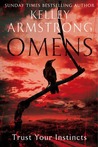
Kelley Armstrong's Omens is, at first glance, a departure from her Women of the Otherworld series – soon to be seen on TV in the form of a serialisation of the novel the series began with, Bitten.  As opposed to the urban fantasy we might expect from the author on the basis of past performance, here the world of Cainsville provides its reader with a melting pot of genres, blended to form a hint of paranormal by way of mystery via thriller.  As someone who is all for an amalgam of elements when given the opportunity to experience something new, this is all to the good – especially given the initial adopted child on a voyage of discovery premise places us on all too familiar ground in terms of premise.  Thankfully, the original set up of the wealthy, beautiful heroine is given a subtle twist before the character arc progresses significantly to introduce the serial killer/crime aspect of the mystery arc.

The author’s note states that “the town of Cainsville has many secrets, and it is loath to part with them a moment sooner than necessary.”  That this is clearly the case becomes apparent as the narrative progresses, given that the build up to Olivia’s discovery that she can see and interpret omens (for as yet unknown reasons) is, like the remainder of the novel, subtle, with considered pacing, as opposed to a ratcheting up of tension.  This holds true for both aspects of Olivia’s sleuthing – that of her “real” identity and who was really responsible for the murders her parents were convicted of.  For some, this will prove problematic, given we receive partial answers to these questions only. 

Whilst the killer aspect receives a necessary “reveal” prior to the conclusion of the novel, allowing it to function partially as a standalone narrative arc, Olivia’s true identity is hinted at only.  Such hints are reasonably few as far as the 486 page page count is concerned, suggesting there is a reasonable amount of ground to be covered by the other novels to follow.  As a result, Omens is arguably only capable of being judged in conjunction with its series companion novels.  It does, however, provide a suitable hook in terms of mystery via which the overarching narrative can continue and demonstrate genuine development.  Ditto in terms of affording room for the world building aspect surrounding the town of Cainsville to gain momentum.

A solid, albeit subtle, start to a new series in different territory, which provides a tantalising glimpse into what – hopefully – will follow.  

Sunday, 20 October 2013

Resurrecting the Zombie Apocalypse – The Days of Flaming Motorcycles (Selective Shorts Series)

It’s about time Catherynne M Valente got a lengthier mention here and where better to start than with one of her short stories – The Days of Flaming Motorcycles (available here to read for free).  At face value, The Days of Flaming Motorcycles is the tale of Caitlin Zielinski – possibly the last non-infected person in Augusta, Maine, living in the aftermath of a zombie apocalypse.  Delve a little deeper, however, and, unsurprisingly, Valente’s story has a little more to tell for itself.  Taking a detour from the usual “them or us” style scenario, Valente suggests the inspiration for the short story came from the concept of the "quiet apocalypse" it was necessary to live through and suggestion of a scenario in which the need to “co-exist” or compromise was examined - something Valente highlights by virtue of Caitlin’s relationship with her infected father with whom she continues to live, having managed to “train” him not to try to attack her, simply by virtue of being faster on each and every occasion he tries.
 

Whilst the concept of family and emotional ties is a familiar theme for those acquainted with the genre, Valente’s story provides for a far more nuanced contemplation on the concept of adaptation, far beyond the usual “fight or flight” scenario we are more used to seeing played out within apocalyptic zombie film and thus follows a less familiar route.  Valente’s “zombies” are not of the “reanimated corpse” variety we are used as reader to encountering; nor are they “mindless” (to quote the point of view characterisation of the short story).  Instead, through observation of Caitlin’s father’s behaviour, we learn that the infected retain the ability to mourn their present state, like “lost children”, communing en masse amongst an increasing “tower of garbage” created from the physical vestiges of their previous lives; their “cathedral” of grief.  By the tale’s conclusion Caitlin too has been drawn into the vestiges of grief’s “religion”.  An original twist on the zombie scenario and thought provoking commentary on the concept of mental and physical decline.  

Wednesday, 27 March 2013

Pieces In The Game


The Rook is Daniel O'Malley's debut novel and he sets out his stall out early.  “Dear You, The body you are wearing used to be mine.” is the opening statement from O’Malley’s protagonist, Myfanwy Thomas (a name she incorrectly and deliberately pronounces Miff-un-wee).  She wakes up holding the letter addressed to herself in a London park surrounded by dead bodies – all wearing latex gloves and no memory whatsoever.  Thus, she – and we, the reader – must follow the trail of instructions left by Myfanwy’s predecessor to discover her lost identity and uncover the individual responsible for leaving her in this state.

Soon enough, O’Malley segues from the woman who finds herself shivering in the rain to the reveal that Myfanwy is in fact a Rook, a high-level operative in a secret governmental agency known as the Checquy, who protect the world from known supernatural threats.  Unfortunately, there is a mole within the agency and this unknown individual wants Myfanwy dead.  So far, so compelling - and a pretty intriguing premise from which to spin what subsequently becomes a complex dual-tone/personality narrative from both Myfanwy and her previous personality.

As an aside, given Myfanwy engages in a form of intellectual play-by-play with her antagonist throughout the course of the narrative and fact that “the game” is even referred to specifically towards the conclusion of the novel, the title of the novel is arguably also a suitably clever way for the author to mirror its overriding theme and reinforce the extent of the author’s knowledge of the text intended to be provided to the reader.

The concept of a “supernatural spy novel” forms a nice twist upon the burgeoning spec fic genre and one which is rich with opportunities to indulge in.  This is James Bond meets Doctor Who/Torchwood, with an additional sinister element added in by virtue of Myfanwy’s amnesiac status at the outset (and thus also a main protagonist reminiscent of Ludlum’s Jason Bourne in this respect). 

The concept of an amnesiac narrator also serves to ensure O’Malley’s debut breaks new ground from previous works within the subject area, such as Tregillis’s alternate history novel, Bitter Seeds, for one, and thus stands out from the crowd.  Further, by throwing elements of action, sci-fi, thriller, mystery and fantasy into the melting pot, O’Malley provides his audience with a somewhat subversive narrative which defies categorisation within purely simplistic terms and ultimately making it a more compelling read as a result.  Not only this but, cleverly, by providing his reader with this kind of set up, both reader and main protagonist maintain the same pace within their fact finding mission and encounter the supernatural world into which we are thrust from the same perspective, with a fresh pair of eyes – both down the rabbit hole together, as it were.  As such, O’Malley’s premise is afforded additional impact.    

Whilst it is true to say that there are a number of “familiar” elements present within O’Malley’s narrative – namely, a boarding school involving young “pupils” with differing “powers” they are encouraged to harness, in addition to the aforementioned amnesiac heroine (as opposed to hero) – it is also correct that they are given a decided twist so as to ensure they fit O’Malley’s purposes – thus, no superhuman strength or x-ray vision per se or overt comparison to X-Men applicable.  Instead, we see fortune telling ducks and individuals capable of exuding neuro-chemicals, for example; thus, more of a nod in the genetic mutant direction, as opposed to treading an already familiar path, in the strictest sense.  Added together, these elements remain fresh enough to ensure the plot is free to stand on its own merits, as opposed to feeling borrowed or weighed down by an inevitable sense of cliché.

Myfanwy herself is also arguably a character capable of definition within the somewhat familiar tropes of the speculative genre.  Whilst she may not be a Harry Potter or Buffy style “chosen one”, she is on one level an individual struggling to come to terms with the powers she knows herself to possess – and, indeed, choose whether to exercise them or not. 

The manner in which O’Malley chooses to address this dilemma is an interesting one, with Myfanwy’s predecessor and Myfanwy herself ultimately coming to differing decisions as to how to act.  Again, then, the narrative refuses to be pinned down in simplistic terms.  Here, O’Malley, whether by deliberate design or otherwise, poses an interesting question; ostensibly a slightly less distinct aspect of the age old “nature versus” nurture issue.  Effectively, what extent can we consider Myfanwy to be a product of her previous experiences in terms of reaction and is her behaviour post-amnesia the result of being freed from these and thus reacting without forethought or preconception?  Does this allow her to fulfil her supernatural potential at a more advanced level, although it previously lay dormant within the body which both versions of Myfanwy inhabit at differing stages?  Given the lack of overt answer within the print on the page, this may well be something O’Malley intends for the reader to reach a decision upon for themselves.   

This issue aside, O’Malley’s narrative is not one which takes itself too seriously – nor should it.  By throwing itself wholeheartedly into a plot which is resplendent with spores and slime, we are afforded the opportunity to enjoy a book which aims predominantly to entertain.  Quite simply, we are intended to have some fun; this being something O’Malley seems to have had whilst building his secret society and its surrounding environs.  With this in mind, we see power supplies cut to Liverpool to prevent a media broadcast concerning ghost animals within the business district and suggestions concerning an individual capable of secreting toxins through her fingertips. 

Whilst this might come across under a different author as overblown, O’Malley keeps us on side by ensuring his tongue remains firmly in cheek during these events and exploits the comic potential of his “fantastical” plotline.  This is aided in no small part by the irreverent voice of his main protagonist, Myfanwy, who makes no secret of her opinions in the face of the events she is forced to play a part in whilst she attempts to uncover her adversary.      

Pleasingly, the secret society agency itself, the Checquy, is realised in a suitable level of detail during the course of the narrative via numerous letters addressed from Myfanwy’s predecessor to herself (“Dear You”), even down to the monarchy-reminiscent crest adorning the black and white cover to the novel.  We also gain a sense of the bureaucratic manner in which any such organisation might be forced to operate and the levels of seniority and power play envisaged by the chess playing piece designations for which its members are named during the course of the discussions by its members with one another.  Thus, O’Malley maintains a delicate balance between realism in his depiction of the supernatural branch of the secret service versus the field work his agents are required to enter into when facing down threats.  Not only are there super-powered foes to face down, there’s a supreme amount of paperwork involved in the process too!
     
Further, we are introduced to the American Bishop, Shantay, expanding our national horizons.  Thus, we gain an impression as to the potential scale of the global supernatural network and O’Malley provides himself with a larger backdrop against which he can stage his narrative in the event of a future sequel.

The level of description, on geographic levels both domestic and international, ensures not only that the supernatural spy “world” of the Checquy is sufficiently well established to convince the reader of its potential plausibility but also that we are provided with the necessary clues for the purposes of the “mystery” element of the narrative which will keep the reader engaged in the quest towards discovery of the truth.  Thus, O’Malley serves to achieve two aims via a singular means.

Thankfully, O’Malley ensures the “mystery” is suitably resolved prior to the debut’s conclusion, as opposed to leaving things hanging for a second or third instalment – also a relief in light of the apparently increasing trend within genre fiction towards “story by instalments” and the prevalence of the “novel via trilogy” within fiction generally.    

Despite the eventual "reveal" of the identity of Myfanwy's nemesis within The Rook, however, matters are sill left suitably open at the conclusion that a return to the world of the Checquy and the Rookery is a distinct possibility.  I understand the author is working on a further instalment and I suspect there may already be a ready market for it on the basis of his opening gambit into the urban fantasy market.

Thursday, 17 January 2013

Starring - London Life

"The day Louisiana teenager Rory Deveaux arrives in London marks a memorable occasion.  For Rory, it’s the start of a new life at a London boarding school.  But for many, this will be remembered as the day a series of brutal murders broke out across the city – gruesome crimes mimicking the horrific work of Jack the Ripper in the autumn of 1888.


Soon “Rippermania” takes hold of modern-day London, and the police are left few leads and no witnesses.  Except one.  Rory spotted the man police believe to the prime suspect.  But she is the only one who saw him.  Even her roommate, who was with her at the time, didn’t notice the mysterious man.  So why can only Rory see him?  And more urgently, what is he planning to do about her?

In this edge-of-your-seat thriller, full of suspense, humour, and romance, Rory will learn the truth about the secret ghost police of London and discover her own shocking abilities."

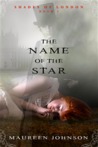
The Name of the Star is the first of Maureen Johnson's novels I’ve read and one which I saw mention of on Twitter.  On my reading it’s an interesting combination of both the familiar and less familiar which affords it a measure of originality in terms of premise and overall effect.

Johnson takes on previously explored territory with her main protagonist, Rory, a teenager who must adjust to newly acquired powers which mark her out as different from her fellow classmates.  In this, the layers of “difference” which ensure Rory stands out from the other students who reside at the Wexford boarding school become multiple, given she has also travelled from America to study there.  Thus, we see British school life very much from the “outside looking in” and Johnson provides a realistic sense of teenage insecurity in the face of the unfamiliar. 

Change during adolescence and exploration of or the sudden onset of supernatural powers as a metaphor for physical change is also a notable concept (Ginger Snaps comes to mind in this regard, for one), however, Johnson concentrates predominantly on emotional territory for the purposes of her narrative, save for the occasional attack of hormones in connection with an on-going romantic subplot.  This is apt in light of the overreaching story arc, which concentrates on a Jack the Ripper “copy cat” killer who must be unmasked by Rory and the members of the team of “ghost police” working within London and with whom Rory becomes familiar as a result of being the only key witness to the continuing investigation.

It is with the Ripper investigations that the narrative begins to build pace and a true sense of menace.  Rory is forced to assist, given it is her life which is ultimately on the line, for reasons which become clear at an early stage in the novel.  Furthermore, time is running out.  The “copy cat” nature of the crimes mean the reader has a clear sense of timescale as the team seek to “out” the killer. 

Johnson concentrates on the so-called “Canonical Five” Ripper victims for the purposes of her narrative, meaning the events which form the basis of the novel take place within a timeframe of just over two months.  During this, we are also treated to re-envisioned forms of the “Saucy Jack” postcard and “From Hell” letter, which formed well documented aspects of the historical police investigations and add to the sense of fully realised world building in this speculative modern day thriller which deliberately mirrors the events of the autumn of 1888.  

In connection with the investigation, the manner in which Johnson highlights the power of the media and manner in which this is responded to by the public is worth noting.  Similarly to 1888, “Rippermania” spreads throughout London and the murders committed by the “copy cat” killer are sensationalised. 

Historically speaking, Johnson has done her research.  The crimes are known to have caused somewhat of a frenzy at the time they were committed, particularly in light of recently instigated tax reforms which resulted in the production of cheap mass circulation newspapers.  For this, Johnson substitutes television press coverage.  Aspects of the crimes are also captured via CCTV footage.  (It is here that the speculative element of the plot becomes particularly important in establishing the extent to which this both helps and hinders police investigation.  This makes for an interesting twist on the concept of the crime thriller - here there is no forensic evidence on which the police can concentrate, notwithstanding technological advancement).      

Characterisation is strong throughout and we get to know the members of the “ghost police” team to a reasonable degree prior to the final confrontation with the unmasked killer, whose motives for the killings is clearly explained.  The “worlds collide” scenario and short timeframe for the race towards the showdown (and 372 pages of the hardback version of the novel) do not afford quite as much opportunity to get to know additional secondary characters, notably Jerome, Rory’s love interest.  Slightly more is documented concerning Jazza, Rory’s roommate.  However, arguably, this would have detracted from the sense of urgency we encounter as the developments within the investigation take on an ever increasing sense of urgency.  Equally, the distinction between Rory’s “school” life and “ghost team” experiences also serves to emphasise the sense of separation she experiences when first becoming aware of her new capabilities.

All told, The Name of the Star has much to recommend it and, noting a sequel is forthcoming shortly, I will be on the lookout for it. 

Tuesday, 8 January 2013

Don't You Dare

“Beth and me wedged tight, jeaned legs pressed against each other.  The sound of our own breathing.  Before we all stopped believing a tornado, or anything, could touch us, ever.  Addy Hanlon and Beth Cassidy are tough, inseparable, invincible.  No pair more charismatic or sophisticated.  No pair more dangerous.”


Megan Abbott's Dare Me is a psychological thriller poised at the edge of the insecurity which accompanies adolescence.  The narrative centres upon Addy Hanlon, a sixteen year old girl and her cheerleading squad, who have just been introduced to their new coach, Coach French.  It is with this introduction that everything changes and the structure which had once seemed to secure begins to dissolve.

Abbott’s second novel revisits similar territory to her first, The End of Everything, concentrating on adolescent girls as it does.  In Dare Me, however, the author ramps things up, producing a subtle and nuanced tale of what can happen when life as we know it starts to take on unfamiliar characteristics.

Beth Cassidy, leader of the cheerleading squad has been used to ruling the roost and manipulating her fellow team members until Coach French arrives at their school.  Almost immediately, the coach disrupts this, removing the recognised leadership structure which has been in place and substituting girls within the team for one another, causing them to strive to prove themselves worthy of their new and unfamiliar positions. 

Both the team and its coach are rife with issues, with teenage drinking and bulimia proving to be the least of their problems as the narrative progresses.  Whilst initially seeming standoffish, Coach French makes the mistake of letting the girls in her squad become too familiar with her life outside of the school building and the discoveries this leads to are what lead to a tense power struggle between Beth and the coach, as Beth becomes privy to secrets her coach would rather she had never discovered.  Meanwhile, Addy is struggling to work out what is going on and who she should trust, balanced between her previous friendship with Beth and new understanding with Coach French – the biggest question being who is responsible for murder, the aftermath of which the novel commences with.

Dare Me delves into the darker side of human nature, exploring marital difficulties and their potential side effects, as well as providing a realistic portrayal of adolescent bullying and the vulnerability of teenage girls and dangers of unspoken attraction.  Abbott takes care to ensure Beth Cassidy does not simply come across as sociopathic in her wilful destruction of the lives of those around her – she displays vulnerability in her interactions with Addy, her former best friend who has been side tracked by her visits to Coach French’s house.  Ultimately, it is this loss and not that of her cheerleading position which wounds her severely.

The narrative also exposes the competitive nature of teenage girls, both in the context of their cheerleading capacity and otherwise.  We see the training and physical demands of the sport and manner in which this can destroy those it seeks to empower via injury or substance misuse.  Ultimately, this also reinforces the underlying message that life has a competitive edge to it and the struggle for survival of the fittest.  This is no more poignant than in the case of Beth, who is borne aloft to the heights, only to be cast down with force.

Despite the murky depths the narrative plumbs, it ends in a more salutary fashion, with the decision to “live by choice” not “chance”.  We do, however, see recognition from Addy concerning the losses encountered in reaching this position of strength – those of Beth, from whom Addy has taken something she refuses to name; knowing if she does so she will be forced to confront it fully and appreciate its significance in a realistic manner.  In this instance, it is the individual who appears to be strong who is ultimately confirmed to be the more vulnerable, hiding this beneath an apparent brittle exterior.  As with a number of instances in the overall narrative arc, matters are more complex than they appear to be at first instance, leaving us with a lasting sense of the complexity of human emotion, psychology and behaviours.

Wednesday, 2 January 2013

Dark Spaces

Having read Gillian Flynn's Gone Girl fairly recently, I was keen to sample some of her earlier work and availed myself of a copy of her second crime thriller, Dark Places, to see whether it stood up to scrutiny, notwithstanding the significant interest which has surrounded Gone Girl post publication (caveat - albeit with good reason!).

Libby Day is a mere seven years old when her mother and two sisters are murdered in what is subsequently termed by the press as “The Satan Sacrifice of Kinakee, Kansas”.  She flees their farmhouse, the scene of the crime, through a window into freezing weather conditions.  Despite losing a finger and a number of toes to frostbite as a result, she survives to testify at the trial of her fifteen year old brother, Ben, who has been accused of the killings.  It is her testimony which ensures a successful conviction.  The narrative commences twenty five years later, as Ben Day serves his prison sentence and the deeply troubled Libby seeks to eke out the last remaining remnants of a trust fund created from public contributions for the victim/survivor whose situation has now been overtaken in the minds of society by more recent crimes.

Much like the more recent Gone Girl, Dark Places utilises fluctuating narrative points of view and swings between both past and present to clarify the events which have led to the situation within which the remaining siblings find themselves – the key question being was Ben Day in fact responsible for the murders of his mother and two sisters and what precisely took place on that eventful day?  The dual narrative is key to the slow reveal, emphasising the potential fallibility of memory and recall – particularly when subject to significant trauma; demonstrating the gaps between what Libby has convinced herself constitutes the truth and what actually took place.  Unsurprisingly, the two do not always marry up and we therefore find ourselves in the familiar company of an unreliable narrator – a technique recently seen to have been utilised to superb effect within Caitlin R. Kiernan’s The Drowning Girl. 

Whilst initially Libby asserts first-hand knowledge of the identity of the killer of her family, we soon learn she was hiding when the murders took place – thus, her only knowledge of them stems from what she heard, as opposed to saw.  This contrasts starkly with what she revealed within her testimony at trial and her assertions within the decades which have followed.  Soon enough, she has agreed to investigate the murders substantively at the request of the self-named “Kill Club”, a secret society obsessed with discussion surrounding notorious crimes – for a fee.

Dark Places is clearly an evocation of small town life in Midwest America.  It is, however, much more than this.  Flynn utilises the deaths of familial members as a catalyst for closer examination of a supremely dysfunctional family and its constituent parts.  In this, no aspect goes unconsidered.  The reader becomes privy to the troubled marriage of the since separated parents and the money worries which have led to the disintegration of the family farm and business, as well as the isolation experienced by their son, Ben, at school and within his own predominantly female family unit, which leads him down the path towards becoming the eponymous “troubled teen”.  Ultimately, the reputation he gains himself leads to serious accusations, even prior to the charges levied against him for murder.  Further, one of the daughters takes pleasure in collecting gossip which can be utilised for potential blackmail purposes to bolster her sense of self-importance – despite her pre-teen age.  Clearly, this raises some interesting questions concerning how much of the manner in which matters play out results from the dysfunctional family life we have been privy to and how much the family becomes subject simply to happenstance and the “wrong place wrong time” scenario, also opening up scope for debate. 

Libby Day herself is a similarly damaged individual; both physically and figuratively, scarred by the experience of the night from which she escaped as survivor and its psychological effects.  She has become a petty thief and hoarder of objects garnered from others.  She is also someone who appears to be incapable of holding down a “normal” job – hence her reliance upon the “Kill Club” fund for her survival.  We are informed she has displayed childhood aggression in the aftermath of the murders.  As such, she resembles the “dark” individuals Flynn chose to examine in her preceding novel, Sharp Objects; something she appears to take interest in as an antithesis to more typical female heroines encountered elsewhere.  For some, this will make her difficult to empathise with, notwithstanding her childhood trauma.  (How much of Libby’s inability to move forwards in life results from the wilful decision not to confront her past and reiterate the “truth” she knows to be subject to question?)  Conversely, for others, this will render her more realistic, as someone who struggles to overcome the events which have, ultimately, shaped the individual she has become.

Ultimately, family becomes important in more ways than one, once it becomes clear that it is not merely the money produced by the “Kill Club” which motivates Libby’s continued investigation concerning the murders.  Latterly, she admits she would have continued without the incentive of payment in her search to confirm the truth surrounding the events of “that night”.  Despite it being clear that her brother is reticent during discussions with her to reveal the true extent of his knowledge surrounding “that night”, Libby is also willing to believe in his innocence, if proven – despite her prior testimony.  The contributory information provided by Libby’s – now homeless – father is also vital to the continuing investigation.  This, too, points to further evidence in connection with the issue of family which comes to the fore at the denouement of the novel.

Arguably, events take a turn towards the slightly less believable in the manner in which the ultimate “reveal” plays out.  However, loose ends are suitably well tied up and the main protagonist, Libby, has demonstrated a move towards a slightly more functional way of living, having confronted the events of her past. 

In conclusion, a satisfying, well-constructed thriller which delves into the reality of a small town family and the secrets this may hide.  Dark Places also delves into the psychological darkness which may be left in the aftermath of violent trauma and struggle not to succumb.  Both chilling and thought provoking.               

Thursday, 20 December 2012

Feet Firmly Facing Forwards

Howl's Moving Castle will be familiar to many, whether as a result of prior knowledge of Diana Wynne Jones' work (of which I’ve made no secret that I’m a fan) or as a result of the more recently released Miyazaki illustrated film, which is also highly recommended.

The book is deceptive and, ultimately, fascinating in light of its subtly subversive effect.  Whilst the narrative commences as what purports to be traditional fantasy, set in the Land of Ingary in which the workings of destiny and magic play a pivotal part, matters soon take a twist towards the less certain. 

We begin with Sophie Hatter, the eldest of three sisters, apparently doomed to fail “first, and worst” if the three set out to seek their fortunes.  As such, she seems consigned to an unremarkable life, not even being the “child of a poor woodcutter”.  It is at this point that it becomes clear that the narrative is intended to play upon the reader’s preconceptions of the fantasy genre in much the same manner as is seen to be employed in Wynne Jones’s Tough Guide to Fantasyland. 

Soon enough, Sophie becomes aware her younger sisters have switched places with one another, having been sent off to gainful employment and apprenticeship as apparently befits their station in life – a solution both are dissatisfied with and for which they find their own solution, having teamed up together.  Not only this but Sophie is confronted by the infamous Witch of the Waste; someone who has apparently formed an ill opinion of her for reasons Sophie herself is incapable of explaining.  As punishment for her supposed competition with the witch, Sophie is transformed into an old woman and finds herself forced to leave her life behind her.  The search for her fortune leads her to the moving castle which is the subject of the title to the novel. 

By this stage, all three sisters are seeking to live their lives on their own terms, to a greater or lesser extent, notwithstanding their apparent predetermined destiny – even Sophie has left the hat shop which was intended to be her inheritance behind, although she attributes this to her unexpected transformation, inferring there was little choice in the matter.  Despite this potential unreliability within our main protagonist, clearly, we have left the realms of the straightforward behind.  Matters are not as they would seem and, apparently, cases of mistaken identity abound.  Sophie’s sisters, Lettie and Martha, are now masquerading as one another and Sophie is forced to pass herself off as “Old Sophie” in light of the spell cast upon her.

Similarly, there are many forms of magic at work once Sophie sets off upon her travels.  Seemingly, the transformation has affected more than just her appearance.  Sophie finds she is capable of exerting herself more, freed from the trappings of her status as the eldest of the family – even manipulating her way into a position and board at the moving castle which is the subject of the novel’s title.  This is not without its hazards.  Howl, the wizard who owns the castle is vain, cowardly, stubborn and prone to chasing after the local women – but only until he has secured their interest.  At that stage, he abandons them for new territory.  Add in a fire demon with whom Sophie makes a bargain, several magical contracts which require to be broken, the continued opposition of the Witch of the Waste and a spell cast unwittingly which appears to have rebounded against its originator and you have the basic elements which constitute the narrative.

This is a journey in more ways than one, with Sophie’s literal journey forming the basis for self-discovery, having set off on her travels.  Ultimately, it transpires that Sophie’s true destiny can only be discovered through standing on her own two feet, as opposed to accepting what is deemed acceptable or appropriate for her.  Being both stubborn and outspoken, she is an engaging heroine and sparks fly in more ways than one when she and Howl confront one another.  Howl, too, learns from their encounters, being forced to confront his own fears and engage in genuine honesty – something which leads directly to the concluding denouement with the Witch of the Waste and, therefore, in some senses, rebounding against him.  It is for the reader to discover how successfully the pair are able to battle against these odds towards the tying up of loose ends and happiness on their own terms.

The strength of Howl’s Moving Castle lies in taking what is arguably a standard fantasy format with which to commence a narrative arc and spinning a less than traditional tale via its composite elements.  Neither Howl nor Sophie constitute the “standard size fits all” hero or heroine, both being as stubborn as one another and it is this which speaks so powerfully to the reader.  They are flawed.  Both demonstrate significantly bad moods, on occasion, with humorous and unexpected consequences.  They make mistakes which they are forced to seek to remedy.  They flounder and grow as a result.  Ultimately, both are unquestionably human in their portrayal and we, the reader, empathise wholly as a result. 

Further, despite being written several decades ago, the novel remains fresh in its message that life is to be lived on our terms and is what we make of it – this being something Sophie learns by its conclusion.  Having reading it on several occasions, I find myself returning to it at regular intervals – perhaps the highest praise I can offer.     

Tuesday, 30 October 2012

Something Sinister Lurks…

In the Tall Grass...

In The Tall Grass is a Stephen King Joe Hill novella collaboration previously released as a two–parter within Esquire and recently released in e-book and audiobook format.  The story begins when a brother and sister pull off to the side of the road after hearing a young boy call for help from beyond the tall grass which forms the title to the story.  Within minutes they have somehow become separated, disoriented and unaccountably lost.  Gradually, they realise something is toying with them, blurring the lines of reality, so that they end up travelling in circles; close to one another and yet never able to reach one another, even when apparently within close proximity and able to converse. 

The premise of the situation is simple and touches upon themes previously addressed within King’s works (Firestarter and Children of the Corn come to mind in respect of the “tall grass”) and it works.  We, the reader, are taken into dark territory, here.  The narrative is disconcerting and, in places, physically and conceptually disturbing, without getting spoiler specific – so, not for the faint at heart.  Ultimately, both characters and situation turn full circle, adding to the sense of a complete narrative arc and claustrophobia of the scenario, from which, it seems, there is no escape.  This leaves a lingering sense of the inevitable on which to ponder as the story closes, as well as a possible need to clean up from the gore.  Chilling and bloody.


As an added bonus, the e-book format includes excerpts from the forthcoming Dr Sleep from King, sequel to The Shining and the beginning of Hill’s forthcoming NOS4R2.  Incidentally, NOS4R2 is already on my TBR’s mental listing…  

Sunday, 14 October 2012

The Worst Things Come In Small Packages...

“When Judas Coyne heard someone was selling a ghost on the internet, there was no question what he was going to do.  It was perfect for his collection of the macabre and the grotesque: the cannibal’s cookbook, the witch’s confession, the authentic snuff movie.  As an ageing death-metal-rock-God, buying a ghost almost qualifies as a business expense.

Besides, Jude thinks he knows all about ghosts, Jude has been haunted for years…by the spirits of bandmates dead and gone, the spectre of the abusive father he fled as a child, and the memory of the girl he abandoned, who killed herself.  But this ghost is different.  Delivered to his doorstep in a black heart-shaped box, the latest addition to Jude’s collection makes the house feel cold.  It makes the dogs bark.  And it means to chase Jude from his home and make him run for his life…"


It was the modern slant within the premise of this novel which reeled me in initially.  After all – why not someone seeking to sell a ghost on the internet?  Dante Knoxx famously sought to auction his soul to the highest bidder via ebay before he was banned for doing so for breaching one of the firm’s policies and the listing was pulled by the site.  (This also puts me in mind of the occasion upon which GameStation inserted an "immortal soul" clause into online contracts as an April Fool’s Day joke.)

Heart-Shaped Box, is however, much more than simply the promise of its premise and a powerful page-turner – although it is undoubtedly both of these too.  Joe Hill's debut novel is, ultimately, an examination of the human condition with psychological depth. 

At the outset of the novel, Jude Coyne, the main protagonist, is a man who has “worked his way through a collection of goth girlfriends” who have “stripped, or told fortunes, or stripped and told fortunes, pretty girls” adorned with “ankhs and black fingernail polish” who he names solely by their “state of origin”.  His present girlfriend, whom he has dubbed Georgia, is twenty-three to his fifty four years of age.  He appears to demonstrate little real regard for her, beyond an appreciation for her goth “adoration” and other adult-oriented benefits of her youth.  Indeed, his stall is set out early in the narrative when he notes that each of his girlfriends, Georgia included, want the “harshness” he provides for them – thus no-one goes away “disappointed”.  Even if at first the end of the relationship and necessity to leave isn’t appreciated by them, they “always” work it out “eventually”.

The clever aspect of the narrative is the manner in which Hill “strips back” the layers surrounding Coyne’s heart and provides us with a man seeking some form of redemption and forgiveness.  Gradually, we learn that the last of Jude’s former girlfriends, Georgia’s predecessor, so to speak, whom he had nicknamed Florida, fared badly as a result of his treatment, given she was predisposed to depression – something Jude had found himself unable to cope with once it spiralled out of control.  Now Craddock, the girl’s stepfather (and the ghost whose suit is proffered via the website in the heart-shaped box of the title) is out for revenge.  This affords us the opportunity to explore Jude’s disquiet over the manner in which he shipped Florida back to her family, particularly once he becomes aware that her background was considerably more complex that he had envisaged and the support he had presumed would be afforded her was lacking.  Via the gradual breaking down of barriers, we come to see that Jude is far removed from the unsympathetic character we are introduced to at the outset of the narrative.

Heart-Shaped Box is very much a novel centring upon haunted individuals in both the literal and figurative sense.  Jude, Florida and even Georgia, or Mary-Beth Kimball, as we come to know her during the course of the novel, are haunted by their past, whether as a result of their own previous actions or those of others in their interactions with them.  It is once these actions are confronted that they take on genuine resonance for the reader – once we come to know them fully, “warts and all”.  Broken and flawed, capable of mistakes, sometimes multiple, we feel for them nevertheless.  Confrontation leads to knowledge and acceptance and, in the case of Jude and Mary-Beth, becomes a dialogue of love against the odds.  Ultimately, this is a touching rumination on the possibility of redemption and human frailty in its various guises.  

Sunday, 16 September 2012

Freaking Out Over Freax and Rejex

Freax and Rejex marks Jarvis' return to the realm of Dancing Jax, a world within which the book of the same name has lulled the vast majority of the British population into a state almost demonic possession where they are convinced of their “true” identity within the sinister fairy tale realm of Mooncaster.  Those who submit to the influence of Austerly Fellows’ occultist text become part of his “magickal Kingdom” and a member of its playing card-based Court.  As a result of this, they also become devoted and submissive to his proclaimed figurehead in our “real” world (which they consider to be a pale imitation of that which they inhabit when in Mooncaster), the Ismus.

Where Dancing Jax concentrated predominantly upon setting up the Court itinerary, Freax and Rejex has its focus firmly upon those teenagers upon whom the lure of the text has no effect – the so-called “Aberrants” who find themselves persecuted, both for being different to what has become established as the “norm” and for what is deemed as resistance to the new British regime and, thus, subversive and dangerous. 

By the outset of the second book within the Dancing Jax trilogy, the text has been published on a wide-scale basis and we are made aware via the “Baxter Blog”, a singular website of resistance hosted via a Dutch server (and scrambled via other channels), that the vast majority of those who sought to protest against the hostile takeover of the Jax regime have been silenced and force fed sections of the text.  As a result, they have become one of the mass of “brainwashed sheep” who now populate the British Empire.  There remain a “scant few” who still resist, whether simply via avoidance of the book or natural immunity.  Martin Baxter, writer of the many times re-established “Baxter blog” and one of the few resistant individuals remaining by the conclusion of the first book in the trilogy, urges those few resistant individuals to abandon Britain, a “finished” country, via his escape route, suitably protected by safeguards put in place to ensure those who have fled are not discovered.

By ensuring his audience is reminded of the risks of resistance in this manner, Jarvis establishes a clear sense of threat at an early stage.  Further, we see the first death before the conclusion of the first chapter, meaning we are aware nothing is certain and the security of characters to whom we have been introduced is not guaranteed.  Without giving away the fate of specific characters, this is something which continues throughout the narrative.

Not content with the chilling effect produced by the first book’s cult-style parallels and premise, Jarvis seeks to up the ante within the second.  A weekend of “glorious Mooncaster-themed fun” has been organised for children aged between seven and sixteen who have not yet “found their way” into the Realm of the Dawn Prince, otherwise also known as Mooncaster.  As might be expected, the Ismus intends for this to form part of a global publicity campaign aimed at “damage limitation” in light of the rumours circulating concerning his bid for the minds of the populace, whilst also ultimately serving his own means and ends.

The “weekend” camp is filled with a hot potch of characters from across the nation and for whom, similarly to a Big Brother style situation, close proximity, coupled with the stresses of the growing realisation that there is no intention to release them from the confines of the camp once they have crossed the threshold, prove too much.  The initial games and feasts give way rapidly to enforced reading of the “hallowed” text and declaration that the teenagers are to be deemed “internees” of the camp, subject to supervision by guards and capable of punishment in the event of disobedience.  By this stage, the holocaust parallels are obvious.  Sure enough, those who have travelled to what has been specified as a “holiday camp” are set to physical labour, forced to “earn” their place within the facility.  At sixteen, they are advised they will be relocated to an adult camp.

Jarvis cleverly subverts our expectations in connection with the teenage “interns”, by ensuring the stereotypical views we might hold of “chavvy” Charm and the arrogant Marcus, for example, do not ultimately prove to be sure-fire.  Once again, as with Jax, his skill in ensuring his characters’ dialogue rings true and in demonstrating regional accents simply via his choice of words and sentence construction adds to the equation.  Ultimately, a number of the characters who appear weaker at the outset or less likely to succeed are those we find ourselves rooting for as they attempt to pit themselves against the will and control of the Ismus and his itinerary.

Whilst we see some of the creatures known to frequent Mooncaster within the camp’s bounds during the course of the narrative, arguably, it is not as a result of these threats that we are subject to the greatest sense of horror.  Frequently, the treatment to which the children are subject makes for extremely uncomfortable reading, whether or not blood is shed and there is one specific example towards the conclusion of the narrative which provides a particularly harsh psychological blow and gut wrenching moment, for the reader and characters alike. The more susceptible might find themselves looking away from the page for a moment, as this is definitely not a read for the faint hearted.   Here, Jarvis also provides a clever contrast between the manner in which Ismus’s Lockpick treats the children, toying with them whilst doing so and the more obvious cruelty of the Punchinello guards. 

Ultimately, it is the manner in which the children see their personal identity eroded and the frequent sense of a lack of control over events which comes across particularly clearly via the events and this which is especially disconcerting.  The immediacy with which social media and the reach of the internet is both able to aid and hinder the spread of the “Jax” manuscript is also an aspect which is hinted at by the author and thus proves itself interesting to speculate upon.  It appears fitting that this is something which is alluded to but that throughout the bulk of the novel that Jarvis concerns himself predominantly with maintaining his overreaching focus upon the fates of the children within the camp.  By the conclusion, however, this is something which once again comes to the forefront for reasons which will become clear to those who avail themselves of a copy of the book.  In bringing things full circle, Jarvis thus places events in a position so as to leave them ready for the conclusion of the trilogy.  In Fighting Pax the Ismus envisages extending his reach even further than has previously been the case…

Freax and Rejex is, once again, both dark and disturbing and, as such, remains with the reader after the conclusion of the narrative.  The writing is tight and events well-paced, whilst also allowing for satisfying character development.  Pleasingly, the second of the three book story arc also has the clout to stand alone on its own merits, whilst slotting neatly into place for the purposes of the trilogy.  Taken together, this is one trilogy it’s easy to find oneself lured towards reading.

Friday, 7 September 2012

Developing Love For Lovecraft (Graphic Illustrations Series)


For those already initiated into the Hill/Rodriquez realm of Locke and Key, Clockworks, the fifth volume within the saga will need little introduction.  For the previously uninitiated, Locke and Key is centred around Keyhouse, a New England mansion containing doors which transform those who pass through them and which also houses a malevolent creature bent upon opening the most dangerous door of all… 

As is suggested by the title, the “doors” are opened by a succession of keys, capable of everything from transforming an individual into a ghost, to letting one open one’s own head to glimpse the memories it contains within it.

Having relocated to Keyhouse after the murder of their father at the outset of Welcome to Lovecraft, Clockworks sees the Locke family brought full circle, back to the events which precede their arrival at the Keyhouse premises in Massachussetts and which have shaped their nemesis, Lucas “Dodge” Caravaggio prior to his descent into the merciless killer the children are faced with in the present day.  Harking back to past events is of course a pattern which has been seen on a number of occasions throughout the course of the narrative arc.  Clockworks, however, is an opportunity for this aspect to be explored in detail prior to the denouement we are already aware will follow within the forthcoming Omega.

The instalment is timely, given the reader is fully invested within the fate of the Locke children by this stage - and the stakes are high.  Dodge already has control of the youngest Locke sibling Bode's body; something neither Tyler nor Kinsey, his elder brother and sister are aware of.  This grants him unrestricted access to Keyhouse in his search to find the Omega key which will allow him to open the Black Door and release what is contained beyond it.

The timing of Clockworks' explanations is clever.  By holding back on the action and presenting us with an explanation as to how the characters have found themselves in the present position, the conclusion itself is guaranteed additional impact and resonance.  Having already seen the children in the aftermath of their father's death and the manner in which they are forced to cope with it, whilst simultaneously finding their feet at a new school and establishing new social circles, we now see the manner in which the death itself will come to pass, given we are privy to Dodge's transformation from friend to foe.  Thus pre-prepared for the way in which the death will ultimately affect the children, the foreshadowing of it via flashback hits home more sharply than if the chronology had been reversed.

Further, the exploration of the relationship between Rendell, the Locke children's father, and the boy who will subsequently become Dodge renders the character much more than simply a cardboard cut-out villain bound upon a course of evil from which he cannot deviate simply for plot purposes.

Sacrifice and the extent to which this is necessary for Dodge to be successfully defeated is a key theme (no pun intended) within Clockworks.  This applies not only to Rendell, the children's father but also a number of the members of his original band of friends.  Thus, there are echoes of the Spiderman motto concerning the great power accompanying great responsibility here.  Ultimately, this is shadowed by regret at its misuse by the time we have explored the manner in which Dodge becomes evil and origins of the keys we have seen the children utilise throughout the story arc.

In amongst the question answering we also see exactly how Erin lost her memories, what lies behind the door Dodge seeks to open and even how Dodge became the girl first encountered in Welcome to Lovecraft, all of which is dealt with in a suitably satisfying manner, as opposed to simply feeling like loose ends being tied with haste.  Again, this is another example of the manner in which the narrative has come full circle for the purposes of the present volume.

Neither narrative nor illustrations pull any punches and Dodge's anticipation of his first killing spree is provided in a gory two page spread towards the conclusion of the volume well deserving of its multiple Eisner nominations.  Both are equally apt (if not for the faint hearted) and provide a clear example of the extent to which the storytelling abilities of both writer and illustrator mesh so successfully throughout Locke and Key.  Possibly, therefore, the only negative aspect of Locke and Key is that Omega marks the final chronological volume of our journey within the original world of Keyhouse and its inhabitants.


Monday, 27 August 2012

Picking Your Team

“Just because Mel lives in New Whitby, a city founded by vampires, doesn’t mean she knows any of the blood-drinking undead personally.  They stay in their part of town; she stays in hers.  Until the day a vampire shows up at her high school.  Worse yet, her best friend, Cathy, seems to be falling in love with him.  It’s up to Mel to save Cathy from a mistake she might regret for all eternity.

On top of trying to help Cathy (whether she wants her to or not), Mel is investigating a mysterious disappearance for another friend and discovering the attractions of a certain vampire wannabe.  Combine all this with a vampire cop, a number of unlikely romantic entanglements, and the occasional zombie, and soon Mel is hip-deep in an adventure that is equal parts hilarious and touching.”

Team Human is a collaborative novel from the pens of authors Justine Larbalestier and Sarah Rees Brennan (who blogs here), produced as a result of a mutual love of vampires and romance, both of which feature largely within the plot of the aforementioned work.  More than this, it is also a tongue in cheek look at the vampire literature genre post Twilight, when the species must automatically be both attractive and sparkly.  Not only is account taken of the world-wide spread of Meyer’s work, there are also sly references to the attraction of high school for the undead which are seen within television programmes such as The Vampire Diaries (and L J Smith herself) and a dedication to the works of John Ajvide Lindqvist, Tanya Huff, Stephen King, Bram Stoker and Charlaine Harris, amongst others.  It is also a lot of fun, being a self-confessed parody.  For Bella and Edward, read Cathy and Francis; without the addition of a Jake character or love triangle.  Vampires walk in broad daylight – encased in Hazmat suits.

Starting out as a Team Vampire versus Team Human standoff, Team Human becomes more than this.  Mel makes for a spiky, yet plucky heroine, equipped with the ability to produce a quick quip where needed.  Cathy demonstrates that her determination to become a vampire is more considered than simply a need to be with Francis for eternity.  Ultimately, this ensures Mel is forced to confront her initial pre-conceptions concerning “Team Vampire” and understand the choices made by others – even if these are not the choices which she would make for herself.  It is also a narrative about love for others and the nature of friendship, clearly demonstrated by the nature of the changing (yet unchanged) relationship between Mel and Cathy.

Team Human is also a book which centres around the issue of emotion – something highlighted by the fact that, for the purposes of this narrative, vampires are incapable of laughter or crying.  Emotional ties are also a central part of the “mystery” sub-plot introduced by Larbalestier and Rees Brennan and form an important aspect of Kit’s (Mel’s love interest) ultimate decision as to whether to become a full member of his “Shade” or to remain human.

Despite being written by two separate authors (or perhaps because of it), the narrative within Team Human flows.  Ultimately, what starts out as a mix of parody and satire becomes more than the sum of its parts and holds a certain charm of its own.  

Thursday, 16 August 2012

A Monstrous Undertaking


“The monster showed up after midnight.  As they do.  But it isn’t the monster Conor’s been expecting.  He’s been expecting the one from his nightmare, the nightmare he’s had nearly every night since his mother started her treatments, the one with the darkness and the wind and the screaming…

This monster, though, is something different.  Something ancient, something wild.  And it wants the most dangerous thing of all from Conor.

It wants the truth.”

A Monster Calls comes complete with a number of accolades, being both the winner of the CILIP Carnegie Medal for children’s literature and its companion prize for illustration, the Kate Greenaway Medal – these within the same year, no less.  It is a deserving winner on both counts and marks a second Carnegie Medal win for Patrick Ness; also second year running in terms of recognition via the award. 

On this occasion, however, Ness cannot take the entire credit for the novel, nor does he make any attempt to do so.  As has been readily acknowledged, the premise for the novel (written by Ness) stems from the final story idea of Siobhan Dowd, a previous Carnegie Medal winner herself, who died of breast cancer in 2008.  She provided the name Conor for the novel’s main protagonist and the concept of the storytelling yew tree giant who materialises in Conor’s bedroom from which the narrative develops.  These had been set out within e-mails to her commissioning editor.  The concept of the novel’s opening had also been produced in draft.  When Dowd died sooner than had been anticipated, Ness was asked by Dowd’s editor to produce a novel inspired by the original idea.  This he describes as having been “handed a baton” which he invites the reader to “run with”.  He dedicates the finished novel to Dowd, noting this would have been her fifth book, had she been afforded the time to complete it.

A Monster Calls is, at the outset, the story of Conor, a thirteen year old boy, whose mother is seriously ill and who is visited by a figure in the shape of a yew tree, who tells him stories.  It is, however, much more than this.  Similarly to Dickens’ A Christmas Carol, Conor is informed he will receive three visitations, following which the yew tree will extract one “truth” from him himself.  Again, similarly to Scrooge, Conor will be changed by the experience, for “stories are the wildest things of all”, according to the monster.  “Stories chase and bite and hunt”.

A Monster Calls is indeed a dark and haunting novel, dealing with a troubled teenager brought face to face with his mother’s battle with cancer (although the illness itself is never named at any stage during the narrative).  He is the subject of school yard bullying and the offspring of divorced parents; issues which are also seen to have an effect upon him within the body of the novel. 

Conor is shown to be both isolated and frightened as a result of his mother’s ill health – he struggles socially, becoming noticeably withdrawn, save for his dealings with the yew tree monster; a figure he tells himself he is simply imagining, although his floor is covered with red yew tree berries and spiky leaves when he wakes post visitation.

The nightmarish quality of Conor’s dealings with the yew tree monster are highlighted by Jim Kay's black and white illustrations throughout.  Here, the lack of colour adds, as opposed to detracts from their power, making them shadowy and affecting – in some cases they span a double page within the hard copy format of the novel or completely surround the words upon the page, adding to the broody and ominous overtones within the artwork.  (Do yourself a favour – opt for the physical version of this one, as opposed to the e-book format on this score; similarly, make your way across to Kay's website to sample other examples of his work).

Ness utilises clear and simple language throughout, the result of which is that the emotional intensity of the narrative is communicated to the reader without ceremony.  Nor is it needed – the direct nature in which the story is addressed and its simplicity emphasise its subject matter.  Concise prose aside, however, Ness refuses to let his readers off lightly.  There is plenty of food for thought for both younger and older readers alike.  The parables with which Conor is regaled by the yew tree monster are shown to be deceptive in their conclusions and ambiguous in terms of interpretation.  As such, they lead Conor to question himself and to enter into questionable behaviour.  This makes him both human and a similarly shadowy individual to that which visits him at 12.07 on each occasion - and all the more compelling for it.  Black and white become murky and populate the grey “somewhere in between” which is also illustrated within the yew tree’s stories.
 
This brings matters back to the concept of storytelling and the power it can create.  Stories can prompt change; the truth, palatable or otherwise, is capable of making a difference.  Thus, Conor must face his own truths and tell the hardest story of them all – the fourth story of the novel; his own.  His struggle to do so towards the conclusion of the narrative is described in the blurb on the back cover as both “harrowing” and “transcendent”.  Unsurprisingly, this means A Monster Calls does not make for what might constitute a comfortable read on occasion.  Nevertheless, it is one which should not be missed.  It is one which will linger beyond the concluding prose and illustrations.    

Sunday, 12 August 2012

On Your Marks...

It being approximately halfway through the year and also summer season, I thought it was about time to collect together a list of a couple of the books I’ve read so far this year and haven’t had chance previously to post a comprehensive review for.

Michelle Hodkin's The Unbecoming of Mara Dyer – the story of a girl calling herself Mara (although that is not her real name) who wakes up in hospital with no memory of how she got there following an accident she can no longer remember which resulted in the deaths of her friends, although she herself remained unharmed.  A spooky supernatural mystery with a romantic sub-plot.  (YA/fantasy/horror/romance/spec fic.)

Margo Lanagan's The Brides of Rollrock Island (known as Sea Hearts in Australia) – a novella about an island community prone to intermarriage with selkies who are “persuaded” into their human form by the witchcraft of the local seal-witch, Misskaella.  Bleak and compelling.  The narrative is provided from multiple perspectives.  (Fantasy/spec fic.)

Caitlin R. Kiernan's The Drowning Girl – a complex first person narrative by India Morgan Phelps (“Imp”), a schizophrenic woman, who struggles to unravel her encounters with what may be mythical creatures or, alternatively, symptomatic of her illness.  Intricate and raises as many questions as it answers.  A study of an unreliable narrator and mental illness, as well as being a consideration of the nature of truth.  Ambiguous and haunting in its conclusion.  An adult read. (Horror/spec fic.)

Stephen King's Full Dark, No Stars – a collection of four novellas, all dealing with the issue of retribution.  1922 is the murder confession of Wilfred Leland James; Big Driver deals with a mystery writer’s encounter with a stranger during a back road shortcut on her way home.  Fair Extension documents a deal with an individual who sells a variety of differing extensions – for which there is always a price.  A Good Marriage queries the extent to which we can know another person – “even those we love the most”.  Darcy Anderson discovers a box under a worktable whilst her husband is away on a business trip and realises he isn’t the man she had thought he was – just as he is heading home.  Harsh and thought provoking, grisly and graphic illustrations of human behaviour.  Fair Extension represents the most overt reference to the supernatural here. (Horror/novella/collection.)

Hilary Mantel's Wolf Hall – which scarcely needs any introduction.  The fictionalised biography documenting the rise to power of Thomas Cromwell within the court of Henry VIII of England which has now been followed by a second part within what is intended to be a trilogy, Bring Up The Bodies.  Winner of the Man Booker Prize and National Book Critics Circle Award.  (Historical fiction.)

Donna Tartt's The Secret History – one I’ve been meaning to get around to reading for a while, given I’d seen a number of positive reviews.  A novel concerning a group of classics students at an elite Amercial college and a Bacchanal which ultimately resembles a Greek tragedy in some respects.  To say much more would compromise the impact of the narrative.  One to experience yourself.  (Contemporary fiction.)

Jo Walton's Among Others – another one I’d heard quite a bit of buzz about before I had the opportunity to read it.  This is one written for anyone who has ever sought consolation or solace between the pages of a book – the narrator, Morwenna Phelps (“Mori”) finds her haven via a local library’s science fiction book club.  Play count the insider references on your way through the narrative – there are an impressive number to note.  This aside, Mori advises us (via her diary entries) she is a girl capable of talking to fairies.  Similarly to The Drowning Girl, it is for the reader to decide whether this is a psychological tool designed to offer comfort from the narrator’s less interesting “real” life or represents a true account of Mori’s suggested powers.  (YA/fantasy/spec fic.)

Sarah Waters' The Little Stranger – a ghost story set in post-war rural Warwickshire in which a doctor is called to a patient at Hundreds Hall, home to the Ayres family for over two centuries.  Slow building, subtle narrative centred around poltergeist activity.  (Contemporary fiction/supernatural.)

Saturday, 11 August 2012

A Delusion of Princes


A Confusion of Princes marks Garth Nix's return to the sci-fi genre post Shade's Children and a welcome return to the field it is.  Whilst Nix is perhaps best known for the brilliantly inventive Abhorsen Trilogy, Confusion revisits a genre within which Nix had already set a high benchmark with his tale of a not so distant future in which a set of evil Overlords have ruled for a period of fifteen years due to a catastrophic “change”.  (Whilst this set up is now relatively familiar within the YA sub-genre, Nix can arguably be credited as somewhat of a trend setter for providing us with a clear example of post-apocalyptic dystopia prior to the popular and recent emergence of the genre).

Genre similarity aside, however, A Confusion of Princes provides us with an altogether trickier protagonist for consideration and one who causes Nix to have to work harder as an author to convince his audience to engage with. 

Confusion concerns itself with the story of Prince Khemri, a genetically enhanced individual trained to become a Prince of the Empire and one who is engaged in a battle for supremacy as one of ten million princes, only one of whom can ultimately succeed in becoming Emperor.  The remaining candidates will find themselves eliminated one way or another…  So far, so promising.  Nix also takes the trouble to ensure his language is spot on sci-fi specific and we are soon drawn into a Heinlein-esque environment in which the Imperial Mind, Bitek agents, Mektek armor and Psitek force shields are par for the course.  (Nix even credits Heinlein within his own Acknowledgments at the outset of the novel). 
 
Clearly, however, Nix is not content merely to provide a convincing backdrop within which for his characters to run rampant or to revisit old ground in his provision of a sci-fi premise for his narrative thread.  In providing us with Prince Khemri as his main protagonist, Nix seeks to up the ante further.  The Prince is a youthful narrator, “not yet twenty in the old Earth years by which it is still the fashion to measure time” and, thus, it might be presupposed one with whom Nix’s intended YA audience might engage.
 
This assumption is challenged quickly and by deliberate design.  Despite being made aware at the outset of events that Khemri has been separated from his parents as a baby at the specific instructions of the Emperor, he spares little thought for them, suggesting there is “no point” in doing so.  He is convinced of his “special” nature and the certainty that he will one day become Emperor.  This persists even once he has become aware he is one of the millions of Princes who are to compete for the honour of ruling the Empire.  As such, it is difficult to find any initial sympathy for Khemri, even once we become aware his supposed security cannot be depended upon, as an initial attempt is made upon his life as part of the candidacy process.  True to form, Khemri is supplied with a Master of Assassins, Haddad, who successfully foils the assassin’s attack.  Additionally, we are advised within the very first sentence of the novel that he has died three times and been “reborn” on each occasion, which reduces the overall sense of threat which might logically follow any reference to death.  Still, Nix is quick to ensure the reader is aware matters are not as clearly cut as they might at first appear and utilises a number of devices to do so.

Despite Khemri’s initial arrogance, Nix ensures this is undercut at the outset by the Prince’s recognition of his own “wilful misapprehension” at his sense of importance, thus ensuring we are aware his overall outlook has changed somewhat since the occurrence of the events presently charted.  Similarly, later, the Prince freely admits when he is slow to react to a potential threat, which directly contradicts the posturing we witness elsewhere.  Further, we are shown that the mouthy candidate has learned at least a modicum of tact whilst he is subject to the discipline of the Naval Academy as part of his path towards eventual rule of the Empire.

Nix keeps events pacey throughout, zipping through Khemri’s naval training and the various Princes with whom he may find himself in more serious competition as their numbers dwindle in their race towards the finishing post.  This works both ways, ensuring pages turn quickly and we are hard on the heels of Khemri’s own urgency to prove his overall worth but also serves to prove that, in some instances, we are aware it would be interesting to spend additional time with those we encounter along the way to explore in-depth analysis of characterisation.  (This is also arguably true in the context of the subsequent burgeoning love story).

The primary focus being Prince Khemri, Nix engineers a scenario in which he finds himself required to rely entirely upon his own “smarts” without the back up of his genetic engineering and it is here that the narrative proves most interesting.  The specific events of the scenario aside, it is once Khemri, or “Khem” as he is dubbed, is separated from the underlying support of the Empire that the character really comes into his own.  None of the situations in which he finds he himself are “standard”, causing him to have to think “outside the box” and reflect upon what constitutes social interaction.  Ultimately, Khemri is forced to contemplate what it means to be human and to confront the concepts of loss, life and death.  For a 337 page book (paperback version), this is no mean feat, considering the manner in which Khemri is first presented to us.  That Nix pulls it off in the main is just further evidence of his “chops” as a writer, if we still required to be convinced.

By the point at which we are advised of Prince Khemri’s impending third death and the narrative has effectively caught up with itself, the outcome for him is no longer clear.  Nix keeps his readers guessing right up until the last few pages as to whether there will be a happy outcome for the Prince and whether he will ascend to the lofty heights of Emperor.  Given Khemri’s thought process throughout these events, the final couple of paragraphs of the novel provide a suitable note on which to end matters and yet leave the reader with something to ponder beyond the words set out upon the page.  Again, this speaks for what Nix is able to achieve within what remains a reasonably slight volume by modern standards, with the themes addressed much wider in scope than initially envisaged at the outset.  As such, the audience, much like Khemri, encounters more than first bargained for upon their journey.