Showing posts with label Spec Fic. Show all posts
Showing posts with label Spec Fic. Show all posts
Sunday, 22 February 2015
Ahem! (Publication Announcement)
I'm really pleased to be able to confirm that my story "Put Your Lights On" is available (to read for free) in the February 2015 The Sirens Call eZine "Whispers In The Dark", which also celebrates Women In Horror Month. I'm extremely lucky that this is my third publication with the eZine and that the story was accepted for this issue particularly.

Monday, 22 December 2014
Publishing Pending..
Checking in here briefly to note a couple of pending publications in the offing as a result of recent submissions and writing online.
My story "Sorrow's Baptised" will feature in the December edition of The Sirens Call eZine later this month.
Additionally, I have two stories due for publication mid January as a result of the Luminous Creatures "Winter of Whimsy and Wyrdness" competition, which has been running over the past seven weeks. The first is an expanded version of my story "Their Guardian Generals" (originally featured at the website here). The other is called "Colourful Talents" and will feature in the forthcoming chapbook which is a collection of competition entries representing the work of some very talented authors. Very pleasing news and I'm really flattered to have my work alongside theirs!

My story "Sorrow's Baptised" will feature in the December edition of The Sirens Call eZine later this month.
Additionally, I have two stories due for publication mid January as a result of the Luminous Creatures "Winter of Whimsy and Wyrdness" competition, which has been running over the past seven weeks. The first is an expanded version of my story "Their Guardian Generals" (originally featured at the website here). The other is called "Colourful Talents" and will feature in the forthcoming chapbook which is a collection of competition entries representing the work of some very talented authors. Very pleasing news and I'm really flattered to have my work alongside theirs!
Friday, 26 September 2014
Ahem! Ahem! (Publication Announcements)
So, I received an e-mail the other day confirming that my story "Fight The Fear" will feature in the October issue of The Opening Line Literary 'Zine. Really good news.
Additionally, I'm aware that the publication date for "In Creeps The Night" has been set as 30th September 2014 for anyone who fancies getting into the Halloween spirit early this year!
Additionally, I'm aware that the publication date for "In Creeps The Night" has been set as 30th September 2014 for anyone who fancies getting into the Halloween spirit early this year!
Wednesday, 10 September 2014
Getting Closer.. (In Creeps The Night)
Couldn't resist sharing the cover reveal for the forthcoming anthology "In Creeps The Night", which will feature my story "Dealbreaker" here. I'm really looking forward to reading it, given I'm lucky enough to know a couple of the other authors who will feature. For those who appreciate horror-themed flash fiction, the anthology will be available on 30th September (in time for Halloween!) in both paperback and as an eBook.
Saturday, 23 August 2014
Ahem! (Publication Announcement)
I received an e-mail the other evening confirming that my story "Dealbreaker" will feature in J.A.Mes Press's Halloween themed anthology "In Creeps The Night" for which 100% of the book sales benefit the Mothers Without Borders charity. Further announcement related to the publication date to follow in due course for those who are interested in having a read!
Thursday, 20 February 2014
Wonderful Word Worlds

Jeff Vandermeer's Wonderbook sets its bar high,
professing itself to be “the definitive road map to writing imaginative fiction
of all kinds” and “unlike any other writing manual you’ve ever seen” due to its
“uniquely visual approach” comprising of more than 200 images and pictorial exercises
designed to stimulate the writer’s imagination.
As such, it is a pleasure to read and make use of. The illustrations run continuously from front
to back cover, varying in style and content – clearly considered with care. Take, for example, the deliberate symmetry of
the black and white cartoon style simplicity adorning the inside of the front
and back pages as only one demonstration of this.
Wonderbook’s
innovative journey through the wonderful word world of fiction writing aims to
guide the novice or intermediate writer from beginning to end in terms of
process, starting with a chapter on “inspiration and the creative life”, before
turning to more structural considerations with “the ecosystem of the story”
(for example, point of view and dialogue), “beginnings and endings” and
“characterisation” and “worldbuilding”.
Whilst Vandermeer is clear on the fact that Wonderbook’s “default setting” is speculative fiction/fantasy,
there is a great deal to be taken from the text by those who deal in realistic
fiction, given all begin in the realm of the writer’s imagination and the
practical nature of the information dealing with topics such as plotting and
exposition. There are also a number of
contributor interviews from the likes of George R. R. Martin,
Neil Gaiman, Joe Abercrombie and Peter Straub scattered throughout the book, which make for interesting reading,
irrespective of one’s genre preferences.
Interactive nature of the text aside, Wonderbook’s other strength is that it is supported by a “Workshop
Appendix” including a number of writing exercises (in addition to the prompts
throughout the main body of the text, of which there are a number) and a
website with additional materials. Some
of these – not all – are specifically flagged in Wonderbook’s text itself.
This provides the writer with more than anticipated on venturing between
the covers of the book and the opportunity for further exploration of the
worlds of the fantastic in fiction. All
this considered, there is much to discover amongst Wonderbook’s self-professed “cabinet
of curiosities” for those interested in the creative process. For me, I consider it money well worth spent.
Saturday, 11 January 2014
A Whistlestop Tour of Cainsville (In Brief Series)
Olivia Jones has lived
a life of privilege and good fortune.
But on the eve of her wedding she discovers two shocking facts. One – she was adopted. Two – her biological parents are notorious
serial killers. And now the secret’s
out, she’s in immediate danger.
A young woman forced
on the run
Running for her life,
Liv must face reality in the most brutal and terrifying way. But then she is confronted with a tantilising
hope – is it possible that her parents weren’t guilty of the murders after
all? And if so, who did commit them?
And the mysterious
town that gave her sanctuary. At a
price.
Arriving at the remote
town of Cainsville, Liv believes she has found the perfect place to hide while
she uncovers the truth. But Cainsville
is no ordinary town – and Liv’s arrival was no accident.”
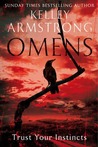
Kelley Armstrong's Omens is, at first glance, a departure from her Women of the Otherworld series – soon to be seen on TV in the form of a serialisation of the novel the series began with, Bitten. As opposed to the urban fantasy we might expect from the author on the basis of past performance, here the world of Cainsville provides its reader with a melting pot of genres, blended to form a hint of paranormal by way of mystery via thriller. As someone who is all for an amalgam of elements when given the opportunity to experience something new, this is all to the good – especially given the initial adopted child on a voyage of discovery premise places us on all too familiar ground in terms of premise. Thankfully, the original set up of the wealthy, beautiful heroine is given a subtle twist before the character arc progresses significantly to introduce the serial killer/crime aspect of the mystery arc.
The author’s note states that “the town of Cainsville has many secrets, and it is loath to part with
them a moment sooner than necessary.” That
this is clearly the case becomes apparent as the narrative progresses, given
that the build up to Olivia’s discovery that she can see and interpret omens (for
as yet unknown reasons) is, like the remainder of the novel, subtle, with
considered pacing, as opposed to a ratcheting up of tension. This holds true for both aspects of Olivia’s
sleuthing – that of her “real” identity and who was really responsible for the
murders her parents were convicted of.
For some, this will prove problematic, given we receive partial answers
to these questions only.
Whilst the killer aspect receives a necessary “reveal” prior
to the conclusion of the novel, allowing it to function partially as a
standalone narrative arc, Olivia’s true identity is hinted at only. Such hints are reasonably few as far as the
486 page page count is concerned, suggesting there is a reasonable amount of
ground to be covered by the other novels to follow. As a result, Omens is arguably only capable of being judged in conjunction with
its series companion novels. It does,
however, provide a suitable hook in terms of mystery via which the overarching
narrative can continue and demonstrate genuine development. Ditto in terms of affording room for the
world building aspect surrounding the town of Cainsville to gain momentum.
A solid, albeit subtle, start to a new series in different territory, which provides a tantalising glimpse into what – hopefully – will
follow.
Sunday, 5 January 2014
2014 – A Year In Anticipation
The start of a new year means I’m already thinking about the
books which are likely to feature on my reading list over the next twelve
months. There are several I’m already
aware of with imminent release dates over the next couple of months I thought
I’d flag here:-
January/February Release Dates

The Girl Who Soared
Over Fairyland and Cut the Moon in Two (UK release date 16/1/014 –
hardcover) – the third volume in Catherynne M Valente's Fairyland series featuring September, a human girl who travels to the
Fairyland referred to in the title and meets a number of interesting
individuals, some of whom become her friends.
To date, I’ve loved this inventive and original fantasy series with its quirky humour
and enjoyed the illustrations which accompany it too. The opportunity to return to Fairyland is
welcome.

Locke and Key: Volume
6 Alpha and Omega (release date 18/2/014 – hardcover) – I’ve been waiting patiently for the final consolidated volume of Joe Hill's graphic novel
series, which I’ve previously mentioned and recommended on the blog. It will be interesting to see how the
narrative arc here plays out.

The Islands of Chaldea
(release date 27/2/014 – hardcover) - I’ve seen mention of a new Diana Wynne Jones book during my travels on the internet – from what I understand, this is a
younger read (so so-called MG, Middle Grade), as opposed to YA as such and
stems from Wynne Jones’ unfinished manuscript which has been completed by her
sister, Ursula Jones. I’ll definitely be
taking a look, given the chance to sample further work from one of my favourite
authors. The brief blurb suggests an
initial premise similar to that covered by Wynne Jones’ Witch Week in terms of magical heritage and geographical barriers
dictating access (or lack thereof of access) to magic. I’m guessing, however, the narrative will
take us somewhere else entirely by its conclusion. I’m looking forward to the transportation.
Playing Catch Up
There are still several novels published in 2013 that I
haven’t yet had chance to get to – as ever!
Those mentioned below are just a sample:-

Hild by Nicola Griffith – this has been mentioned a number of times on sites/via Twitter as a
recommended read, making me curious to check it out.
To quote from the Publisher’s blurb (full copy available at
the author’s website here):
"Hild is born into a world in
transition. In seventh century Britain,
small kingdoms are merging, usually violently.
…Hild is the king’s youngest niece.
She has the powerful curiosity of a bright child, a will of adamant, and
a way of seeing the world—of studying nature, of matching cause with effect, of
observing her surroundings closely and predicting what will happen next—that
can seem uncanny, even supernatural, to those around her.
She establishes a
place for herself in court as the king’s seer.
And she is indispensable—unless she should ever lead the king
astray. The stakes are life and death:
for Hild, her family and loved ones, and for the increasing numbers of those
who seek the protection of the strange girl who can read the world and see the
future.”
Ancillary Justice
by Ann Leckie – this is another one which keeps
popping up as a recommended read (sample excerpt available on the author’s
website here) and seems to be described as a combination of SF adventure by way of space
opera. I want to check this one out,
time allowing.

Love Minus Eighty
by Will McIntosh – the premise for McIntosh’s sci-fi novel set in a future dystopian New York City (that of “frozen Bridesicle” women revived to participate in on demand dating) intrigues me. Without having yet had time to track down a copy of the Hugo winning short story it originates from, the novel seems (potentially,
at least) to delve into Whedon-esque Dollhouse territory. Thus, I'm interested to see how the romance angle and agency are dealt with, these being tricky aspects for commentary in light of the subject matter.
In the TBR Pile
Running with a common theme, there are still a number of
books already purchased and patiently waiting for me to get to them in amongst
everything else:-

Neil Gaiman's Fortunately, The Milk has been sitting
at the top of my pile for a little while.
I may even have been saving it consciously for the point where the
festive season was over and the Day Job kicked in…

Stephen King's Doctor Sleep is there too. The chance to read the follow up to The Shining is one couldn't pass up on. (Also – Stephen King recently joined the realms of Twitter for those who are interested!)

Donna Tartt's The Goldfinch – yes, the one everyone’s been talking about for quite a
while. I caught up on The Secret History
a while after all of the buzz and need to set aside sufficient time to devote
to this one’s 784 pages (hardcover version).
Wednesday, 1 January 2014
Neverwhere – Where? (Hear Ye! Series)
I’ve been enjoying the rerun of BBC Radio Four's production of Neil Gaiman's Neverwhere over the Christmas period and wanted to mention it here in case anyone wanted to listen before time runs
out. Apparently, the first episode is
only available for approximately 12 hours (GMT), having previously been
broadcast on 25/12/013, so if you want to check out the audio broadcast, with a
cast including James McAvoy, Natalie Dormer, Bernard Cribbins and Benedict Cumberbatch, amongst others (including brief cameos by Neil Gaiman himself!),
you can find Episode One here. Various links and information concerning the
production here.
Sunday, 20 October 2013
Resurrecting the Zombie Apocalypse – The Days of Flaming Motorcycles (Selective Shorts Series)
It’s about time Catherynne M Valente got a lengthier mention here and where better to start than with one of her short stories
– The Days of Flaming Motorcycles (available here to read for free).
At face value, The Days of Flaming
Motorcycles is the tale of Caitlin Zielinski – possibly the last non-infected
person in Augusta, Maine, living in the aftermath of a zombie apocalypse. Delve a little deeper, however, and,
unsurprisingly, Valente’s story has a little more to tell for itself. Taking a detour from the usual “them or us”
style scenario, Valente suggests the inspiration for the short story came from
the concept of the "quiet apocalypse" it was necessary to live through and suggestion of a scenario in which the
need to “co-exist” or compromise was examined - something Valente highlights by
virtue of Caitlin’s relationship with her infected father with whom she
continues to live, having managed to “train” him not to try to attack her,
simply by virtue of being faster on each and every occasion he tries.
Whilst the concept of family and emotional ties is a familiar
theme for those acquainted with the genre, Valente’s story provides for a far more
nuanced contemplation on the concept of adaptation, far beyond the usual “fight
or flight” scenario we are more used to seeing played out within apocalyptic
zombie film and thus follows a less familiar route. Valente’s “zombies” are not of the
“reanimated corpse” variety we are used as reader to encountering; nor are they
“mindless” (to quote the point of view characterisation of the short
story). Instead, through observation of Caitlin’s
father’s behaviour, we learn that the infected retain the ability to mourn
their present state, like “lost children”, communing en masse amongst an
increasing “tower of garbage” created from the physical vestiges of their
previous lives; their “cathedral” of grief. By the tale’s conclusion Caitlin too has been
drawn into the vestiges of grief’s “religion”.
An original twist on the zombie scenario and thought provoking
commentary on the concept of mental and physical decline.
Wednesday, 27 March 2013
Pieces In The Game

The Rook is Daniel O'Malley's debut novel and he sets out his stall out early. “Dear You, The body you are wearing used to be mine.” is the opening statement from O’Malley’s protagonist, Myfanwy Thomas (a name she incorrectly and deliberately pronounces Miff-un-wee). She wakes up holding the letter addressed to herself in a London park surrounded by dead bodies – all wearing latex gloves and no memory whatsoever. Thus, she – and we, the reader – must follow the trail of instructions left by Myfanwy’s predecessor to discover her lost identity and uncover the individual responsible for leaving her in this state.
Soon
enough, O’Malley segues from the woman who finds herself shivering in the rain to
the reveal that Myfanwy is in fact a Rook, a high-level operative in a secret
governmental agency known as the Checquy, who protect the world from known
supernatural threats. Unfortunately,
there is a mole within the agency and this unknown individual wants Myfanwy
dead. So far, so compelling - and a
pretty intriguing premise from which to spin what subsequently becomes a
complex dual-tone/personality narrative from both Myfanwy and her previous
personality.
As an
aside, given Myfanwy engages in a form of intellectual play-by-play with her
antagonist throughout the course of the narrative and fact that “the game” is
even referred to specifically towards the conclusion of the novel, the title of
the novel is arguably also a suitably clever way for the author to mirror its overriding
theme and reinforce the extent of the author’s knowledge of the text intended
to be provided to the reader.
The concept
of a “supernatural spy novel” forms a nice twist upon the burgeoning spec fic
genre and one which is rich with opportunities to indulge in. This is James
Bond meets Doctor Who/Torchwood, with an additional sinister
element added in by virtue of Myfanwy’s amnesiac status at the outset (and thus
also a main protagonist reminiscent of Ludlum’s Jason Bourne in this respect).
The concept
of an amnesiac narrator also serves to ensure O’Malley’s debut breaks new
ground from previous works within the subject area, such as Tregillis’s
alternate history novel, Bitter Seeds, for one, and thus stands out from the crowd. Further, by throwing elements of action,
sci-fi, thriller, mystery and fantasy into the melting pot, O’Malley provides
his audience with a somewhat subversive narrative which defies categorisation
within purely simplistic terms and ultimately making it a more compelling read
as a result. Not only this but,
cleverly, by providing his reader with this kind of set up, both reader and
main protagonist maintain the same pace within their fact finding mission and
encounter the supernatural world into which we are thrust from the same
perspective, with a fresh pair of eyes – both down the rabbit hole together, as
it were. As such, O’Malley’s premise is
afforded additional impact.
Whilst it
is true to say that there are a number of “familiar” elements present within
O’Malley’s narrative – namely, a boarding school involving young “pupils” with
differing “powers” they are encouraged to harness, in addition to the
aforementioned amnesiac heroine (as opposed to hero) – it is also correct that
they are given a decided twist so as to ensure they fit O’Malley’s purposes –
thus, no superhuman strength or x-ray vision per se or overt comparison to X-Men applicable. Instead, we see fortune telling ducks and
individuals capable of exuding neuro-chemicals, for example; thus, more of a
nod in the genetic mutant direction, as opposed to treading an already familiar
path, in the strictest sense. Added
together, these elements remain fresh enough to ensure the plot is free to
stand on its own merits, as opposed to feeling borrowed or weighed down by an
inevitable sense of cliché.
Myfanwy
herself is also arguably a character capable of definition within the somewhat
familiar tropes of the speculative genre.
Whilst she may not be a Harry
Potter or Buffy style “chosen
one”, she is on one level an individual struggling to come to terms with the
powers she knows herself to possess – and, indeed, choose whether to exercise
them or not.
The manner
in which O’Malley chooses to address this dilemma is an interesting one, with
Myfanwy’s predecessor and Myfanwy herself ultimately coming to differing
decisions as to how to act. Again, then,
the narrative refuses to be pinned down in simplistic terms. Here, O’Malley, whether by deliberate design
or otherwise, poses an interesting question; ostensibly a slightly less
distinct aspect of the age old “nature versus” nurture issue. Effectively, what extent can we consider
Myfanwy to be a product of her previous experiences in terms of reaction and is
her behaviour post-amnesia the result of being freed from these and thus
reacting without forethought or preconception?
Does this allow her to fulfil her supernatural potential at a more
advanced level, although it previously lay dormant within the body which both
versions of Myfanwy inhabit at differing stages? Given the lack of overt answer within the
print on the page, this may well be something O’Malley intends for the reader
to reach a decision upon for themselves.
This issue
aside, O’Malley’s narrative is not one which takes itself too seriously – nor
should it. By throwing itself
wholeheartedly into a plot which is resplendent with spores and slime, we are
afforded the opportunity to enjoy a book which aims predominantly to
entertain. Quite simply, we are intended
to have some fun; this being something O’Malley seems to have had whilst
building his secret society and its surrounding environs. With this in mind, we see power supplies cut
to Liverpool to prevent a media broadcast concerning ghost animals within the
business district and suggestions concerning an individual capable of secreting
toxins through her fingertips.
Whilst this
might come across under a different author as overblown, O’Malley keeps us on
side by ensuring his tongue remains firmly in cheek during these events and
exploits the comic potential of his “fantastical” plotline. This is aided in no small part by the
irreverent voice of his main protagonist, Myfanwy, who makes no secret of her
opinions in the face of the events she is forced to play a part in whilst she
attempts to uncover her adversary.
Pleasingly,
the secret society agency itself, the Checquy, is realised in a suitable level
of detail during the course of the narrative via numerous letters addressed
from Myfanwy’s predecessor to herself (“Dear You”), even down to the monarchy-reminiscent
crest adorning the black and white cover to the novel. We also gain a sense of the bureaucratic
manner in which any such organisation might be forced to operate and the levels
of seniority and power play envisaged by the chess playing piece designations
for which its members are named during the course of the discussions by its
members with one another. Thus, O’Malley
maintains a delicate balance between realism in his depiction of the
supernatural branch of the secret service versus the field work his agents are
required to enter into when facing down threats. Not only are there super-powered foes to face
down, there’s a supreme amount of paperwork involved in the process too!
Further, we
are introduced to the American Bishop, Shantay, expanding our national
horizons. Thus, we gain an impression as
to the potential scale of the global supernatural network and O’Malley provides
himself with a larger backdrop against which he can stage his narrative in the
event of a future sequel.
The level
of description, on geographic levels both domestic and international, ensures
not only that the supernatural spy “world” of the Checquy is sufficiently well
established to convince the reader of its potential plausibility but also that
we are provided with the necessary clues for the purposes of the “mystery”
element of the narrative which will keep the reader engaged in the quest towards
discovery of the truth. Thus, O’Malley
serves to achieve two aims via a singular means.
Thankfully,
O’Malley ensures the “mystery” is suitably resolved prior to the debut’s
conclusion, as opposed to leaving things hanging for a second or third
instalment – also a relief in light of the apparently increasing trend within
genre fiction towards “story by instalments” and the prevalence of the “novel
via trilogy” within fiction generally.
Despite the eventual "reveal" of the identity of Myfanwy's nemesis within The Rook, however, matters are sill left suitably open at the conclusion that a return to the world of the Checquy and the Rookery is a distinct possibility. I understand the author is working on a further instalment and I suspect there may already be a ready market for it on the basis of his opening gambit into the urban fantasy market.
Thursday, 17 January 2013
Starring - London Life
Soon “Rippermania”
takes hold of modern-day London, and the police are left few leads and no
witnesses. Except one. Rory spotted the man police believe to the
prime suspect. But she is the only one
who saw him. Even her roommate, who was
with her at the time, didn’t notice the mysterious man. So why can only Rory see him? And more urgently, what is he planning to do
about her?
In this
edge-of-your-seat thriller, full of suspense, humour, and romance, Rory will
learn the truth about the secret ghost police of London and discover her own
shocking abilities."
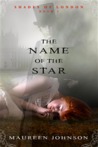
The Name of the Star is the first of Maureen Johnson's novels I’ve read and one which I saw mention of on Twitter. On my
reading it’s an interesting combination of both the familiar and less familiar
which affords it a measure of originality in terms of premise and overall
effect.
Johnson takes on previously explored territory with her main
protagonist, Rory, a teenager who must adjust to newly acquired powers which
mark her out as different from her fellow classmates. In this, the layers of “difference” which
ensure Rory stands out from the other students who reside at the Wexford
boarding school become multiple, given she has also travelled from America to
study there. Thus, we see British school
life very much from the “outside looking in” and Johnson provides a realistic
sense of teenage insecurity in the face of the unfamiliar.
Change during adolescence and exploration of or the sudden
onset of supernatural powers as a metaphor for physical change is also a
notable concept (Ginger Snaps comes
to mind in this regard, for one), however, Johnson concentrates predominantly
on emotional territory for the purposes of her narrative, save for the
occasional attack of hormones in connection with an on-going romantic
subplot. This is apt in light of the
overreaching story arc, which concentrates on a Jack the Ripper “copy cat”
killer who must be unmasked by Rory and the members of the team of “ghost
police” working within London and with whom Rory becomes familiar as a result
of being the only key witness to the continuing investigation.
It is with the Ripper investigations that the narrative
begins to build pace and a true sense of menace. Rory is forced to assist, given it is her
life which is ultimately on the line, for reasons which become clear at an
early stage in the novel. Furthermore,
time is running out. The “copy cat”
nature of the crimes mean the reader has a clear sense of timescale as the team
seek to “out” the killer.
Johnson concentrates on the so-called “Canonical Five”
Ripper victims for the purposes of her narrative, meaning the events which form
the basis of the novel take place within a timeframe of just over two
months. During this, we are also treated
to re-envisioned forms of the “Saucy Jack” postcard and “From Hell” letter,
which formed well documented aspects of the historical police investigations
and add to the sense of fully realised world building in this speculative
modern day thriller which deliberately mirrors the events of the autumn of 1888.
In connection with the investigation, the manner in which
Johnson highlights the power of the media and manner in which this is responded
to by the public is worth noting.
Similarly to 1888, “Rippermania” spreads throughout London and the
murders committed by the “copy cat” killer are sensationalised.
Historically speaking, Johnson has done her research. The crimes are known to have caused somewhat
of a frenzy at the time they were committed, particularly in light of recently
instigated tax reforms which resulted in the production of cheap mass
circulation newspapers. For this,
Johnson substitutes television press coverage.
Aspects of the crimes are also captured via CCTV footage. (It is here that the speculative element of
the plot becomes particularly important in establishing the extent to which
this both helps and hinders police investigation. This makes for an interesting twist on the
concept of the crime thriller - here there is no forensic evidence on which the
police can concentrate, notwithstanding technological advancement).
Characterisation is strong throughout and we get to know the
members of the “ghost police” team to a reasonable degree prior to the final
confrontation with the unmasked killer, whose motives for the killings is
clearly explained. The “worlds collide”
scenario and short timeframe for the race towards the showdown (and 372 pages
of the hardback version of the novel) do not afford quite as much opportunity
to get to know additional secondary characters, notably Jerome, Rory’s love
interest. Slightly more is documented
concerning Jazza, Rory’s roommate.
However, arguably, this would have detracted from the sense of urgency
we encounter as the developments within the investigation take on an ever
increasing sense of urgency. Equally,
the distinction between Rory’s “school” life and “ghost team” experiences also serves
to emphasise the sense of separation she experiences when first becoming aware
of her new capabilities.
All told, The Name of
the Star has much to recommend it and, noting a sequel is forthcoming
shortly, I will be on the lookout for it.
Saturday, 29 December 2012
2012 - A Reading Year In Review
The close of the year is a decent opportunity to reflect
upon and share a few of the books I’ve most enjoyed reading and haven’t yet had
time to feature here. Unsurprisingly,
there are a few of these.
2012 was a year I set myself to expanding consciously upon
my previous reading horizons and looking to material outside of my normal
comfort zone, this being something I achieved in part – both as a result of
ensuring varied content for the blog and otherwise. This notwithstanding, there has also been
plenty of time for genre reading – this being a firm favourite and something I
tend to revert to at varied intervals.
Spec Fic
I’ve been reading spec fic ever since my parents bought me a
copy of Diana Wynne Jones' Howl’s Moving Castle for a previous
birthday. Looking back, a number of this
year’s reads fall within this category, such as the subject of my previous
review entry; this also being a re-read for this year (as for many).
Additional stand out reads for this year include Patrick Ness's A Monster Calls and my first reading experience in
connection with the works of Catherynne M Valente – The Girl Who Circumnavigated Fairyland In A Ship Of Her Own Making, described within the blurb upon the cover as “a glorious balancing act between
modernism and the Victorian fairy tale, done with heart and wisdom” by Neil Gaiman. Winner of the Andre Norton Award and
similarly lauded by the author of The Last Unicorn, Tamora Pierce and
Holly Black, this is one novel which deserves the praise heaped upon it. I was similarly impressed by the highly
anticipated follow up The Girl Who Fell Beneath Fairyland And Led The Revels There.
Intelligent writing for smart readers.
Highly recommended.
Mixing YA into the melting pot here, I’ve also thoroughly
enjoyed Kate Milford's The Boneshaker and The Broken Lands, which I read almost back to back,
having ordered one whilst I was approximately halfway through the other. Milford blurs the boundaries between fact and
fiction by adding a certain amount of historical background into her tales of
crossroads bargaining and demons and produces something noteworthy on each
occasion as a result. Genuinely
entertaining reading.
Short Fiction
Probably not as many in this category as I would have liked,
although I’m always on the look-out for suitable shorts. I have, however, been dipping in and out of Shadow Show, the tribute anthology to Ray Bradbury and particularly enjoyed Kelly Link's contribution, Two
Houses.
During my random internet trawls for short fiction I also
came across Calum Kerr's collection of flash fiction, 31, inspired by recent participation in NaNoWriMo and each entry of
which was written in a single 10 to 20 minute sitting. I, for one, enjoyed them, being partial to
the odd piece of “shorter than short”.
Kate Milford’s The
Kairos Mechanism probably also deserves a mention here, being novella
length. This is effectively a “bridge”
story between The Boneshaker and her subsequent prequel novel, The Broken Lands but well worth the read
simply on its own merits as a folklore based fantasy tale. The project was originally Kickstarter
self-funded but is also available in paperback and e-book format via Milford's own website.
Despite not having been published this year, I’m also
mentioning Kat Howard's The Calendar of Saints as one of the pieces of short fiction which
has had a significant effect upon me more recently. A beautifully written tale of the blade as
both instrument and point of honour.
Historical Fiction
YA also features here, with Elizabeth Wein's Code Name Verity being the one which
impressed me the most. Wein produces an
affecting duel narrative detailing the fate of two friends who become involved
in the British war effort – the “sensational team” referred to upon the back
cover. Gripping and full of well
researched detail.
Crime/Thriller
Despite being (arguably) better known for her genre fiction,
my most recent experience of Elizabeth Hand's work
stems from her foray into the world of crime/literary thriller in the form of Generation Loss and Available Dark (another example of a prequel published subsequent to the events which follow
it, similarly to Milford’s The Broken
Lands). An unlikely examination of art
and redemption.
Graphic Novels
Graphic novels also feature within my 2012 reading list,
despite this previously having been a neglected area for me. Some of this is due in part to the sheer
readability of Locke and Key, a series I’ve been following throughout this year and which
arguably opened my eyes to a subsection of the bookshelf I’d previously been
missing out on. I’m eagerly awaiting the
conclusion to this series and will hope for the possibility of stand-alones,
even once the overall narrative arc is concluded.
Whilst this isn’t a comprehensive list of the works I
haven’t previously referred to here for this year and isn’t intended to act as
a “best of” or “top five” or “ten” in
the strictest sense, it does highlight at least a couple which I feel are well
worth the time expended upon their contents.
Hopefully there’s something which may take your fancy and provide some
reading material for the next occasion on which you have time for
the written word.
Thursday, 20 December 2012
Feet Firmly Facing Forwards

The book is deceptive and, ultimately, fascinating in light
of its subtly subversive effect. Whilst
the narrative commences as what purports to be traditional fantasy, set in the
Land of Ingary in which the workings of destiny and magic play a pivotal part,
matters soon take a twist towards the less certain.
We begin with Sophie Hatter, the eldest of three sisters,
apparently doomed to fail “first, and worst” if the three set out to seek their
fortunes. As such, she seems consigned
to an unremarkable life, not even being the “child of a poor woodcutter”. It is at this point that it becomes clear
that the narrative is intended to play upon the reader’s preconceptions of the
fantasy genre in much the same manner as is seen to be employed in Wynne
Jones’s Tough Guide to Fantasyland.
Soon enough, Sophie becomes aware her younger sisters have
switched places with one another, having been sent off to gainful employment
and apprenticeship as apparently befits their station in life – a solution both
are dissatisfied with and for which they find their own solution, having teamed
up together. Not only this but Sophie is
confronted by the infamous Witch of the Waste; someone who has apparently
formed an ill opinion of her for reasons Sophie herself is incapable of
explaining. As punishment for her
supposed competition with the witch, Sophie is transformed into an old woman
and finds herself forced to leave her life behind her. The search for her fortune leads her to the
moving castle which is the subject of the title to the novel.
By this stage, all three sisters are seeking to live their
lives on their own terms, to a greater or lesser extent, notwithstanding their
apparent predetermined destiny – even Sophie has left the hat shop which was
intended to be her inheritance behind, although she attributes this to her
unexpected transformation, inferring there was little choice in the matter. Despite this potential unreliability within
our main protagonist, clearly, we have left the realms of the straightforward
behind. Matters are not as they would
seem and, apparently, cases of mistaken identity abound. Sophie’s sisters, Lettie and Martha, are now
masquerading as one another and Sophie is forced to pass herself off as “Old
Sophie” in light of the spell cast upon her.
Similarly, there are many forms of magic at work once Sophie
sets off upon her travels. Seemingly,
the transformation has affected more than just her appearance. Sophie finds she is capable of exerting
herself more, freed from the trappings of her status as the eldest of the family
– even manipulating her way into a position and board at the moving castle
which is the subject of the novel’s title.
This is not without its hazards.
Howl, the wizard who owns the castle is vain, cowardly, stubborn and
prone to chasing after the local women – but only until he has secured their
interest. At that stage, he abandons
them for new territory. Add in a fire
demon with whom Sophie makes a bargain, several magical contracts which require
to be broken, the continued opposition of the Witch of the Waste and a spell
cast unwittingly which appears to have rebounded against its originator and you
have the basic elements which constitute the narrative.
This is a journey in more ways than one, with Sophie’s
literal journey forming the basis for self-discovery, having set off on her
travels. Ultimately, it transpires that
Sophie’s true destiny can only be discovered through standing on her own two
feet, as opposed to accepting what is deemed acceptable or appropriate for
her. Being both stubborn and outspoken,
she is an engaging heroine and sparks fly in more ways than one when she and
Howl confront one another. Howl, too,
learns from their encounters, being forced to confront his own fears and engage
in genuine honesty – something which leads directly to the concluding
denouement with the Witch of the Waste and, therefore, in some senses,
rebounding against him. It is for the
reader to discover how successfully the pair are able to battle against these
odds towards the tying up of loose ends and happiness on their own terms.
The strength of Howl’s
Moving Castle lies in taking what is arguably a standard fantasy format
with which to commence a narrative arc and spinning a less than traditional
tale via its composite elements. Neither
Howl nor Sophie constitute the “standard size fits all” hero or heroine, both
being as stubborn as one another and it is this which speaks so powerfully to
the reader. They are flawed. Both demonstrate significantly bad moods, on
occasion, with humorous and unexpected consequences. They make mistakes which they are forced to
seek to remedy. They flounder and grow
as a result. Ultimately, both are
unquestionably human in their portrayal and we, the reader, empathise wholly as
a result.
Further, despite being written several decades ago, the
novel remains fresh in its message that life is to be lived on our terms and is
what we make of it – this being something Sophie learns by its conclusion. Having reading it on several occasions, I
find myself returning to it at regular intervals – perhaps the highest praise I
can offer.
Saturday, 17 November 2012
Places Historic (Selective Shorts Series)
Highlighting another short story I located courtesy of
Lightspeed Magazine today, this being Holly Black's Heartless.
Heartless is a
narrative concerning the aftermath of battle and destruction – and the pickings
which may be sifted from the battle ground in that aftermath by those who follow
in the wake of the warriors; the camp women who scavenge amongst the
corpses. Ada is one such and this is her
story. The story of a “hedge-witch no
more”, forced to scrounge for the spoils of war as part of the camp or face the
possibility she may be killed by those who have invaded her lands.
Death appears in many guises within what is a deceptively
short story at 3656 words – not only does Ada make her way through the physical
remnants of the soldiers’ remains as they lie discarded about the battlefield
but she is faced with the choice concerning whether or not to leave a surviving
soldier to his eventual demise. When she
attempts to abandon him she is prevented from doing so by an ancestral manes,
whose innate capability for good or ill is rumoured to be questionable.
Similarly, sacrifice plays an important part within the
overall story arc. Ada wears a finger
bone about her neck to sever her emotions from the situation in which she finds
herself and ensure she feels no fear or pain.
Ultimately, as the story proceeds, it becomes clear that there is more
than the literal and simplistic manner in which pain can be encountered and that
there are circumstances within which failing to act or care may be more harmful
than the alternative. Further, Ada’s
choice concerning whether to live or die mirrors her decision regarding the nobleman
she must decide whether to aid or leave to death.
The imagery related to the severed finger and manner in
which Ada is thus rendered “heartless”, as per the title, is also neat, with
Roman culture in mind. An economic tale
which takes us to places historic.
Monday, 29 October 2012
A Survivor’s Story (Graphic Illustrations Series)

“The continuing story of survival horror” referred to on the
cover to the volume does a good job of summarising precisely what it is the
covers conceal between them – the story of a group of survivors who are
fighting against the odds for their lives in a post-apocalyptic world which has
been overrun by zombies. (If you opt for
the hardcover volume, as opposed to the trade paperbacks, you get the first two
volume trade paperbacks within the one hardcover format, here.)
The story concentrates predominantly upon Rick Grimes, a cop
in a former life, his wife, Lori, their son, Carl and the people whom the
family have found themselves surrounded by during the course of their journey
to date as they travel around America, seeking to stay alive and fight off the
ever present danger to which they are forced to remain alert.
We begin with Rick’s wakening from a coma in hospital,
surrounded by the undead, travelling rapidly to Atlanta and beyond, as he
searches for his family in amongst the chaos, confusion and walking dead or
“walkers” as they subsequently become known.
Pushed to the limits as they are by the circumstances within
which the group and the others they
encounter along the way are, the graphic novel series is a study in
human psychology and the lengths to which individuals are willing (or
otherwise) to go to survive.
Unsurprisingly, the necessity for unceasing vigilance drives some to
lengths to which they had not possibly considered they were be willing to go. There are those who do not survive, whether
as a direct result of zombie attack or otherwise. Similarly, characters are shown to clash over
decisions and judgment calls – frequently.
Given the pressure they remain under at every stage, this is scarcely
surprising. No one individual is perfect
or remains infallible in the face of danger; particularly given the high
stakes. In this kind of scenario there
are no genuinely easy answers. One wrong
decision results in loss of life - possibly the decision-maker’s own. Small wonder there is a tendency towards
aggression once the immediate zombie-related threat has passed.
The lack of certainty as to who will stay safe from one day
to the next feels real and adds to the sense of threat under which the group
travel. Similarly, the geographic
boundaries of the narrative switch rapidly, with the group changing location a
number of times, given winding down too much could result in their premature
death. No one resting place remains
secure for long, with the nomadic group forced to relocate, their RV being the
only constant within the equation. This
keeps both characters and reader on their toes, as we are unsure from which
direction the next threat to their existence may come. In some instances, this stems from the
individuals they encounter. In others,
the threat is more mundane; such as a lack of fuel for transportation, leaving
them momentarily stranded. Again, this
builds upon the overall concept of survival horror. Practicalities are a necessary evil; even in
a world overrun by the undead. Food is
just as essential as shelter and Kirkman ensures we are aware of this along the
way.
Further, the constant shadow of death is seen to have an
impact in each instance on those who are left behind. We see those who struggle to reconcile
themselves with the fact that friends and family have passed beyond their aid
and seeking to maintain compassion for those who have succumbed along the way,
as well as the longer term effects of coming to terms with loss. Whilst the narrative is violent and pulls no
punches in terms of the manner in which the characters are dispatched, it never
feels gratuitous.
Ultimately, this is a gripping and pacey character driven
tale of humanity, rendered beautifully in black and white (or grey)
throughout. The narrative zips past,
leaving the reader wholly committed to following the future turmoil surrounding
the group by its conclusion. As you may
have gathered, I will be back for more.
Sunday, 28 October 2012
Celebrations Ensue
Following on from my previous post related to Neil Gaiman's All Hallow's Read,
I recently learnt that he has released a free audiobook download of a short
story, Click-Clack the Rattle Bag, in
conjunction with Audible in celebration of the festival. Even better, each free download results in a
donation to charity. US and UK sites are
accessible here (US) and here (UK), subject to which you’ll have access to a suitably spooky story for
Hallowe'en. It’s approximately 10
minutes long and sends a shiver down the spine by the conclusion. Be quick, though, as the story will only be
capable of download until Hallowe'en.
Enjoy!
Tuesday, 16 October 2012
Being Human (Selective Shorts Series)
Nina Kiriki Hoffman is an author I was introduced to via a
second hand copy of The Thread That Binds The Bones a while back. Hence the fact that I was pleased to have the
opportunity to read her recent contribution to the online magazine, Lightspeed,
Monster, Finder, Shifter. Effortless prose aside, this story about a
family who have produced several generations of “monster-finders” is actually an
examination of what it means to be human and the difficult choices it can be
necessary to make in an ongoing quest for knowledge and self-realisation. Thought provoking and capable of transporting
one fully into the world it inhabits within just under 7000 words.
And another thing - it also reminds me to find time to take
a look at her most recent collection of 16 examples of her short fiction, Permeable Borders when I get chance.
Sunday, 14 October 2012
The Worst Things Come In Small Packages...

Besides, Jude thinks he knows all about ghosts, Jude has
been haunted for years…by the spirits of bandmates dead and gone, the spectre
of the abusive father he fled as a child, and the memory of the girl he
abandoned, who killed herself. But this
ghost is different. Delivered to his
doorstep in a black heart-shaped box, the latest addition to Jude’s collection
makes the house feel cold. It makes the
dogs bark. And it means to chase Jude
from his home and make him run for his life…"
It was the modern slant within the premise of this novel
which reeled me in initially. After all
– why not someone seeking to sell a ghost on the internet? Dante Knoxx famously sought to auction his
soul to the highest bidder via ebay before he was banned for doing so for
breaching one of the firm’s policies and the listing was pulled by the site. (This also puts me in mind of the occasion
upon which GameStation inserted an "immortal soul" clause into online contracts
as an April Fool’s Day joke.)
Heart-Shaped Box, is however, much more than simply the
promise of its premise and a powerful page-turner – although it is undoubtedly
both of these too. Joe Hill's debut
novel is, ultimately, an examination of the human condition with psychological
depth.
At the outset of the novel, Jude Coyne, the main
protagonist, is a man who has “worked his way through a collection of goth
girlfriends” who have “stripped, or told fortunes, or stripped and told fortunes, pretty girls” adorned
with “ankhs and black fingernail polish” who he names solely by their “state of
origin”. His present girlfriend, whom he
has dubbed Georgia, is twenty-three to his fifty four years of age. He appears to demonstrate little real regard
for her, beyond an appreciation for her goth “adoration” and other
adult-oriented benefits of her youth.
Indeed, his stall is set out early in the narrative when he notes that
each of his girlfriends, Georgia included, want the “harshness” he provides for
them – thus no-one goes away “disappointed”.
Even if at first the end of the relationship and necessity to leave
isn’t appreciated by them, they “always” work it out “eventually”.
The clever aspect of the narrative is the manner in which
Hill “strips back” the layers surrounding Coyne’s heart and provides us with a
man seeking some form of redemption and forgiveness. Gradually, we learn that the last of Jude’s
former girlfriends, Georgia’s predecessor, so to speak, whom he had nicknamed
Florida, fared badly as a result of his treatment, given she was predisposed to
depression – something Jude had found himself unable to cope with once it
spiralled out of control. Now Craddock,
the girl’s stepfather (and the ghost whose suit is proffered via the website in
the heart-shaped box of the title) is out for revenge. This affords us the opportunity to explore
Jude’s disquiet over the manner in which he shipped Florida back to her family,
particularly once he becomes aware that her background was considerably more
complex that he had envisaged and the support he had presumed would be afforded
her was lacking. Via the gradual
breaking down of barriers, we come to see that Jude is far removed from the
unsympathetic character we are introduced to at the outset of the narrative.
Heart-Shaped Box is very much a novel centring upon haunted
individuals in both the literal and figurative sense. Jude, Florida and even Georgia, or Mary-Beth
Kimball, as we come to know her during the course of the novel, are haunted by
their past, whether as a result of their own previous actions or those of
others in their interactions with them.
It is once these actions are confronted that they take on genuine
resonance for the reader – once we come to know them fully, “warts and
all”. Broken and flawed, capable of
mistakes, sometimes multiple, we feel for them nevertheless. Confrontation leads to knowledge and
acceptance and, in the case of Jude and Mary-Beth, becomes a dialogue of love
against the odds. Ultimately, this is a
touching rumination on the possibility of redemption and human frailty in its
various guises.
Sunday, 16 September 2012
Freaking Out Over Freax and Rejex

Where Dancing Jax concentrated predominantly upon setting up the Court itinerary, Freax and Rejex has its focus firmly upon those teenagers upon whom the lure of the text has no effect – the so-called “Aberrants” who find themselves persecuted, both for being different to what has become established as the “norm” and for what is deemed as resistance to the new British regime and, thus, subversive and dangerous.
By the outset of the second book within the Dancing Jax trilogy, the text has been published on a wide-scale basis and we are made aware via the “Baxter Blog”, a singular website of resistance hosted via a Dutch server (and scrambled via other channels), that the vast majority of those who sought to protest against the hostile takeover of the Jax regime have been silenced and force fed sections of the text. As a result, they have become one of the mass of “brainwashed sheep” who now populate the British Empire. There remain a “scant few” who still resist, whether simply via avoidance of the book or natural immunity. Martin Baxter, writer of the many times re-established “Baxter blog” and one of the few resistant individuals remaining by the conclusion of the first book in the trilogy, urges those few resistant individuals to abandon Britain, a “finished” country, via his escape route, suitably protected by safeguards put in place to ensure those who have fled are not discovered.
By ensuring his audience is reminded of the risks of resistance in this manner, Jarvis establishes a clear sense of threat at an early stage. Further, we see the first death before the conclusion of the first chapter, meaning we are aware nothing is certain and the security of characters to whom we have been introduced is not guaranteed. Without giving away the fate of specific characters, this is something which continues throughout the narrative.
Not content with the chilling effect produced by the first book’s cult-style parallels and premise, Jarvis seeks to up the ante within the second. A weekend of “glorious Mooncaster-themed fun” has been organised for children aged between seven and sixteen who have not yet “found their way” into the Realm of the Dawn Prince, otherwise also known as Mooncaster. As might be expected, the Ismus intends for this to form part of a global publicity campaign aimed at “damage limitation” in light of the rumours circulating concerning his bid for the minds of the populace, whilst also ultimately serving his own means and ends.
The “weekend” camp is filled with a hot potch of characters from across the nation and for whom, similarly to a Big Brother style situation, close proximity, coupled with the stresses of the growing realisation that there is no intention to release them from the confines of the camp once they have crossed the threshold, prove too much. The initial games and feasts give way rapidly to enforced reading of the “hallowed” text and declaration that the teenagers are to be deemed “internees” of the camp, subject to supervision by guards and capable of punishment in the event of disobedience. By this stage, the holocaust parallels are obvious. Sure enough, those who have travelled to what has been specified as a “holiday camp” are set to physical labour, forced to “earn” their place within the facility. At sixteen, they are advised they will be relocated to an adult camp.
Jarvis cleverly subverts our expectations in connection with the teenage “interns”, by ensuring the stereotypical views we might hold of “chavvy” Charm and the arrogant Marcus, for example, do not ultimately prove to be sure-fire. Once again, as with Jax, his skill in ensuring his characters’ dialogue rings true and in demonstrating regional accents simply via his choice of words and sentence construction adds to the equation. Ultimately, a number of the characters who appear weaker at the outset or less likely to succeed are those we find ourselves rooting for as they attempt to pit themselves against the will and control of the Ismus and his itinerary.
Whilst we see some of the creatures known to frequent Mooncaster within the camp’s bounds during the course of the narrative, arguably, it is not as a result of these threats that we are subject to the greatest sense of horror. Frequently, the treatment to which the children are subject makes for extremely uncomfortable reading, whether or not blood is shed and there is one specific example towards the conclusion of the narrative which provides a particularly harsh psychological blow and gut wrenching moment, for the reader and characters alike. The more susceptible might find themselves looking away from the page for a moment, as this is definitely not a read for the faint hearted. Here, Jarvis also provides a clever contrast between the manner in which Ismus’s Lockpick treats the children, toying with them whilst doing so and the more obvious cruelty of the Punchinello guards.
Ultimately, it is the manner in which the children see their personal identity eroded and the frequent sense of a lack of control over events which comes across particularly clearly via the events and this which is especially disconcerting. The immediacy with which social media and the reach of the internet is both able to aid and hinder the spread of the “Jax” manuscript is also an aspect which is hinted at by the author and thus proves itself interesting to speculate upon. It appears fitting that this is something which is alluded to but that throughout the bulk of the novel that Jarvis concerns himself predominantly with maintaining his overreaching focus upon the fates of the children within the camp. By the conclusion, however, this is something which once again comes to the forefront for reasons which will become clear to those who avail themselves of a copy of the book. In bringing things full circle, Jarvis thus places events in a position so as to leave them ready for the conclusion of the trilogy. In Fighting Pax the Ismus envisages extending his reach even further than has previously been the case…
Freax and Rejex is, once again, both dark and disturbing and, as such, remains with the reader after the conclusion of the narrative. The writing is tight and events well-paced, whilst also allowing for satisfying character development. Pleasingly, the second of the three book story arc also has the clout to stand alone on its own merits, whilst slotting neatly into place for the purposes of the trilogy. Taken together, this is one trilogy it’s easy to find oneself lured towards reading.
Subscribe to:
Posts (Atom)